Are fillers for nasolabial folds worth it?
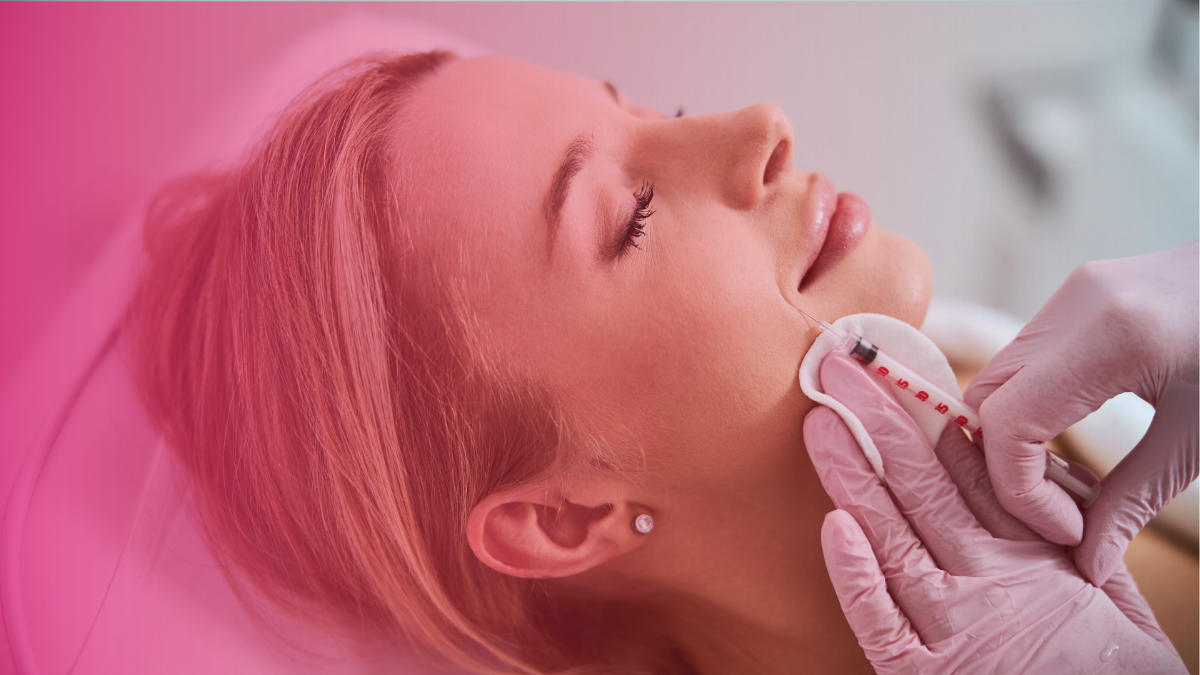
Nasolabial fold filler is worth it for most patients who are genuinely bothered by their smile lines. The result is immediate, downtime is minimal, and a cost of $600 to $1,800 per treatment is reasonable for a correction that commonly lasts a year or longer. Among aesthetic treatments, the ratio of visible change to money spent and recovery endured is favorable.
The caveat is that treating the fold directly does not always address what caused it. Nasolabial folds deepen for several reasons at once — midface volume loss, skin laxity, and the ordinary repetition of smiling — and injecting the crease alone treats the most visible symptom rather than the source. A skilled injector will often recommend restoring cheek volume instead of, or alongside, filling the fold, which changes both the result and the price. Understanding that distinction before your consultation is the difference between buying a treatment and buying a plan.
How long does filler in the nasolabial folds actually last?
Most hyaluronic acid fillers placed in the nasolabial folds last somewhere between nine and eighteen months, though individual results vary and some patients report closer to two years depending on the product and how quickly their body metabolizes it.
Prices vary by location and provider.
Placement is the single biggest variable. Filler injected directly into the fold tends toward the shorter end of that window, commonly around a year, because it sits in an area of constant motion and that shortens its working life. Filler used to restore cheek volume, which softens the fold indirectly by addressing midface deflation, generally lasts longer. Products formulated for deep structural placement in the midface are cited by their manufacturers as lasting up to around two years, and they sit in a region that moves far less.
Product choice matters almost as much. Thicker, more cross-linked products designed for structural support persist longer than lighter products designed to sit closer to the surface. Your injector chooses based on the depth of correction needed and your anatomy, and that decision affects longevity more than anything you do afterward.
The rest comes down to you. Metabolism, age, and exercise habits all play a part, and patients who are very physically active often find that filler in any area fades sooner than average. A few things shorten the interval measurably: heavy sun exposure, smoking, and significant weight loss during the period all reduce how long a correction holds. Mention any planned laser, radiofrequency, or ultrasound treatment to your injector too, since the timing of those relative to your filler appointment is worth coordinating rather than leaving to chance.
Most providers recommend a review appointment around the twelve-month mark to assess what remains and decide whether a full treatment or a smaller top-up is appropriate. Layering onto a partially intact base often costs less than starting over, which is worth factoring in rather than assuming you repeat the full price every year.
How much does it cost to fill nasolabial folds?
Nasolabial fold filler costs $600 to $900 per syringe nationally, and most patients need one to two syringes depending on the depth of the folds and whether the provider is also addressing midface volume. Full treatment typically runs $600 to $1,800.
Prices sit at the top of national ranges in major metro markets such as New York and Los Angeles, and lower in mid-sized markets for the identical product. That difference reflects commercial rent and local competition rather than anything clinical.
Always ask which specific product is being used, how much of it you are receiving, and whether touch-up product is available at a reduced rate inside a defined window. A price meaningfully below the typical range deserves a direct question about the product and the volume, because the syringe is the unit that is easiest to quietly shrink.
What makes the price go up or down?
Syringe count. This is the largest variable by a wide margin. Deep folds and a midface-first approach both use more product, and two syringes cost roughly twice one.
Product choice. Firmer, structurally engineered products generally cost more per syringe than lighter ones. They also tend to last longer, so the cost per month of result is often closer than the sticker price suggests.
Injector. A core physician injector with a long track record charges more than a newer injector, and in an area with the anatomy this one has, experience is one of the few premiums that reliably buys you something.
Metro. Expect the top of the range in the largest markets and the bottom in smaller ones.
What is bundled. Some practices include a follow-up assessment and a small amount of touch-up product. Others charge for both. Two quotes that look identical can differ meaningfully once you ask.
What do Koreans do for nasolabial folds?
Korean aesthetic practice often approaches this area by treating midface volume first rather than injecting directly into the fold, and that approach aligns with what many experienced Western injectors now do as well. Lifting and restoring volume in the cheeks reduces the depth of the fold without overloading the crease itself, which tends to produce a lighter, more natural result.
Skin quality receives more emphasis in the typical Korean protocol than in the typical American one. Injectable skin boosters such as Profhilo and Rejuran are widely used in Korean clinics to improve hydration and skin quality, which makes folds appear softer even without structural filler. Neither is FDA-approved in the United States, so patients here will encounter different products aimed at similar goals.
The least glamorous element is also the most transferable. Consistent daily sun protection is the best-supported step for slowing the collagen loss that deepens these folds over time, and it costs a fraction of anything in this article.
Who benefits most from this treatment?
The patients who tend to be happiest are those in their thirties to fifties with moderate folds driven mainly by volume loss, reasonably good skin quality, and realistic expectations about softening rather than erasure. In that group, one or two syringes produce a change visible to the patient and rarely obvious to anyone else.
Patients who have noticed the fold appearing in photographs but not yet in the mirror are often ideal candidates, because treating a moderate fold requires less product than treating a deep one and the result looks more natural.
Patients who want the treated area to look untouched, rather than dramatically different, are also well suited. Filler in this region rewards restraint, and the best results are typically the ones nobody can identify.
Who should probably skip it?
Patients with significant skin laxity and heavy jowling are candidates in the technical sense and frequently poor candidates in the practical sense. The product volume required to make a real difference is expensive, the result can look heavy, and the underlying problem is descent rather than deflation. A consultation that includes surgical and energy-based options serves those patients better.
Patients whose main complaint is texture rather than volume — fine lines etched into the skin, crepiness, sun damage — will spend money on the wrong tool. Resurfacing and topical treatment address that.
Patients with an active infection or inflamed skin at the site should wait. Patients who are pregnant or breastfeeding are generally advised to postpone, since filler has not been studied in those groups. Patients seeking a cosmetic procedure during a period of acute distress deserve a slower conversation than a booking.
Patients who cannot comfortably absorb a recurring annual expense should also weigh this carefully, because the treatment is maintenance rather than a one-time correction.
What does maintenance actually cost over five years?
This is the calculation that determines whether the treatment is worth it, and it is rarely presented at a consultation.
At $600 to $1,800 per treatment, repeated roughly every twelve to eighteen months, five years of maintenance lands somewhere in the low-to-mid four figures at the conservative end and considerably higher for patients needing two syringes annually in an expensive market. Sensible planning means treating the first appointment as the first of several rather than as the whole expense.
Two things reduce the running cost. Addressing midface volume rather than repeatedly filling the crease often produces longer-lasting results, which stretches the interval between appointments. Booking a review before the product has fully dissipated frequently means a smaller top-up rather than a full replacement.
If the five-year figure gives you pause, that is useful information, and it is a better time to learn it than three appointments in.
What can go wrong?
Bruising, swelling, and tenderness are common in the first few days and resolve on their own. Lumps that can be massaged or adjusted are not unusual in the first two weeks, which is one reason a follow-up appointment matters.
Asymmetry happens, since faces are not symmetric to begin with and healing is not identical on both sides. Most of it is correctable with a small adjustment.
The serious complication, though rare, is vascular occlusion, in which filler enters or compresses a blood vessel. The nasolabial region sits near the angular artery, which makes injector experience genuinely relevant here rather than merely preferable. Ask whether the practice keeps hyaluronidase on site and what their protocol is; the answer should be immediate and specific. Pain that increases rather than fades, skin that turns white, gray, or dusky, and any change in vision warrant contacting your provider straight away rather than waiting to see whether it settles.
Over-filling is the most common aesthetic disappointment, and it is usually the result of chasing complete erasure of a fold that was never going to disappear.
Plan the appointment at least two weeks before anything you care about photographing. Swelling and bruising peak in the first seventy-two hours, small irregularities frequently settle on their own inside the first fortnight, and the face you see on day three is not the result you are buying.
What are the alternatives, and when is one of them better?
Filler is not the only way to soften this area, and the right answer depends on what created the fold.
Collagen stimulators such as Sculptra and Radiesse build gradual structural support rather than filling the line directly. They cost more upfront, develop over months, and cannot be dissolved, which makes them a poor first choice for a patient who is uncertain and a reasonable one for a patient with diffuse volume loss across the whole midface.
Energy-based skin tightening, including Ultherapy and radiofrequency microneedling, works on laxity rather than volume. It will not replace what deflated, but for a patient whose fold is driven by loose skin it addresses something filler cannot, and the two are frequently used alongside each other.
Thread lifts sit between injectables and surgery. They can produce a modest lift with less downtime than an operation, though results are generally temporary and typically shorter-lived than the price suggests, and outcomes vary considerably with technique and patient selection.
A facelift repositions tissue and removes excess skin. It costs several times what a filler appointment costs and requires real recovery, but for folds driven by descent rather than deflation it corrects the actual problem, and years of filler will not substitute for it.
Resurfacing and prescription topicals address the surface. If the crease looks worse because the skin over it is thin, sun-damaged, or finely lined, no amount of volume underneath will change that.
Most faces involve more than one of these processes at once, which is why a consultation that examines the whole face beats a price list for a single syringe.
What should you ask before booking?
Ask whether the injector recommends filling the fold, restoring midface volume, or both, and ask them to explain why in terms of your anatomy rather than in general.
Ask which product, how many syringes, and what the total cost is — including any follow-up. Ask what the plan is if you want more after two weeks, and whether the practice charges full price for a small top-up.
Ask who is injecting, what their credentials are, and how frequently they treat this specific area. Ask whether hyaluronidase is stocked on site.
Ask to see before-and-after photographs of patients with folds like yours, taken at consistent angles and at least two weeks after treatment rather than immediately afterward. Ask what they would advise if you told them your budget was half of what they quoted, since the answer reveals whether they are prioritizing your result or the invoice.
Find providers near you
Get Clear Beauty puts aesthetic prices where you can see them, so you can compare before you book rather than after a consultation. Start with the nasolabial fold filler cost guide for typical ranges by metro, then read the nasolabial fold filler recovery guide for what to expect in the days after treatment.
Compare Nasolabial Fold Filler providers and estimated prices near you.
Nasolabial Fold Filler cost guide →This article is for general education about aesthetic treatments and pricing. It is not medical advice and is not a substitute for a consultation with a licensed provider. Always confirm current pricing and suitability directly with a provider before booking.
New aesthetic treatment blogs every week, sent straight to your inbox.
Subscribe on Substack →
Comments
Comments are reviewed before they appear. For medical questions, please consult a licensed provider — we cannot give medical advice here.
Loading comments…