Can You Have a Neck Lift Without a Facelift?
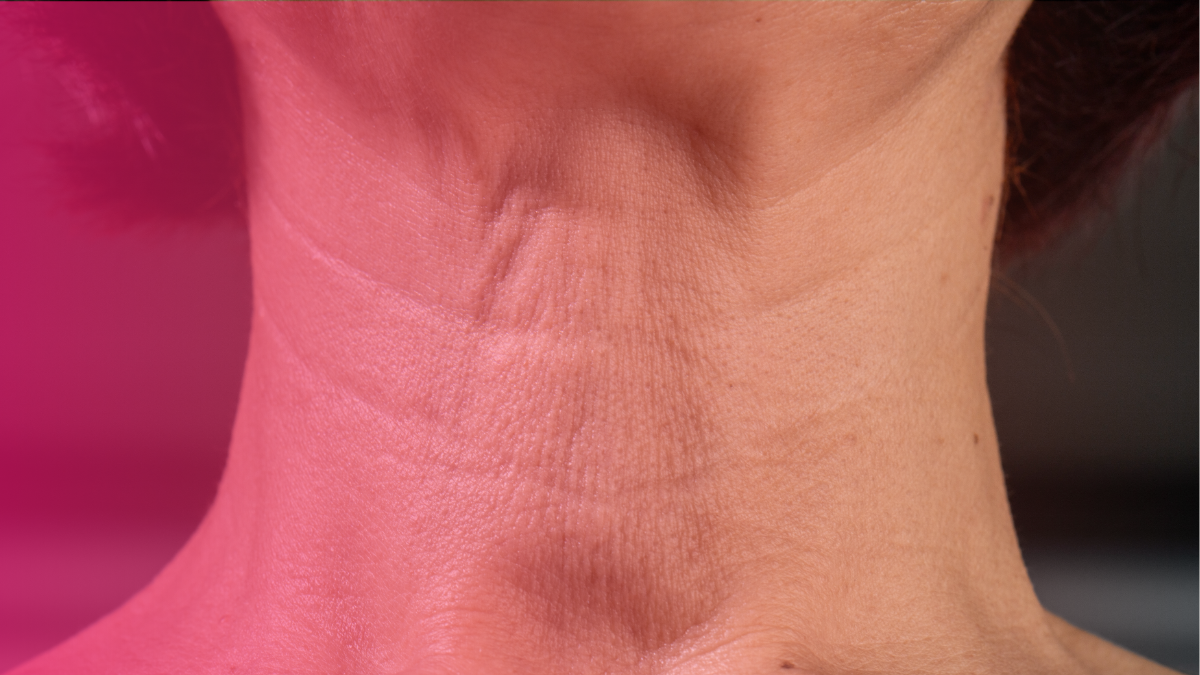
Yes, a neck lift can be performed on its own, and for the right patient it produces an excellent result. The right patient is usually younger, has good skin elasticity, and has an isolated problem: fat under the chin, visible platysmal bands, or a blunted angle beneath the jaw, with a jawline that is still reasonably defined. In that person a neck lift alone addresses the actual complaint and a facelift would add recovery and expense without adding much.
In an older patient with genuine excess skin, a neck lift alone commonly under-delivers, and the reason is anatomical rather than commercial. A neck lift is performed largely through an incision under the chin, which reaches the midline and the front edges of the platysma muscle. It cannot remove skin from the sides of your neck. The only way to remove surplus side-of-neck skin is to redrape it upward and backward toward the ear, and the incision that allows that is a facelift incision. Our published estimate for a neck lift is $11,000 to $19,800, all-in, meaning the surgeon’s fee, the anesthesia and the facility are included.
What does a neck lift actually involve?
Neck lift is an umbrella term, and the vagueness is precisely where patients are sold the wrong operation. Four distinct things hide under the label.
Prices vary by location and provider.
Cervicoplasty removes and redrapes neck skin. Platysmaplasty is surgery on the platysma, the broad sheet of muscle across the front of the neck. It can be done as midline plication, as a corset suture that brings the two muscle edges together through an incision under the chin, or by transecting the muscle. Platysmaplasty is what treats visible vertical bands and sharpens the angle beneath the chin. Submental liposuction removes fat and nothing else. Deep neck work goes below the muscle to address subplatysmal fat, the digastric muscles and the submandibular glands. It is newer, more aggressive, and carries higher risk.
When you read a quote or a consultation note, ask which of those four you are being sold. A patient told she is having a neck lift and given submental liposuction alone will be disappointed if her problem was muscle bands, because removing fat does nothing to a band.
Why can’t a neck lift remove skin from the sides of your neck?
A facelift places its incisions around the ear, and its lifting vectors pull tissue up and back, which tightens the jawline and the lateral neck. A neck lift approached from under the chin works in a different direction and a different place. It can tighten muscle in the midline, remove fat, and sharpen the cervicomental angle. It has no route to the skin on the sides of your neck, because that skin has nowhere to go without an incision near the ear to hide the removal.
The literature supports the same selection rule from the other direction. Liposuction alone produces an inadequate result where skin quality is poor or platysmal bands are present, and in a series of suction lipectomy performed without platysmaplasty, a crepe-paper skin appearance before surgery was the strongest predictor of a poor outcome. If you can pinch and lift loose skin across the side of your neck, a procedure that cannot reach that skin will not fix it.
Who is a good candidate for a neck lift alone?
The profile is reasonably consistent. Skin that still retracts when you release it. A localized fat pad under the chin, or bands that appear when you clench. A jawline and midface you are already content with. Stable weight. No nicotine use. Controlled blood pressure.
When those boxes are ticked, a standalone neck lift with platysma work has good published outcomes. A systematic review and pooled analysis of 12 studies covering 2,106 patients who underwent neck lift with platysma transection reported overall nerve damage at 0.9% and recurrence of platysmal bands at 1.4%.
If instead your skin has lost most of its recoil, if your jowls bother you as much as your neck, or if you expect one operation to deliver a jawline you have not had in twenty years, a surgeon telling you that you need facelift incisions is describing physics rather than upselling you.
What does $11,000 to $19,800 cover, and what changes if you add a facelift?
Our range is all-in: surgeon, anesthesia and facility. The spread is wide because the four components above differ enormously in operating time, and because deep neck work takes considerably longer than a midline platysmaplasty.
Here is the useful piece of arithmetic that rarely appears on clinic sites. Combining a neck lift with a facelift is not simply the two prices added together, because the anesthesia and the facility are shared across one longer operation rather than billed twice. The surgeon’s fee rises, but the two largest non-surgeon costs do not double. If you are weighing a standalone neck lift now against a neck lift plus facelift later, ask both prices in the same consultation, because doing them separately means paying for two operating rooms, two anesthesia bills and two recoveries.
Ask also what a revision would cost, since minor revisions in this procedure are not unusual, and ask whether preoperative labs, garments and prescriptions sit inside or outside the quote.
Can threads, Kybella or Ultherapy do the same job?
No, and the claims made for them are where the most misleading marketing in this category lives.
A thread lift places barbed sutures under the skin without removing any skin. The effect is temporary and modest, and the technique cannot treat skin excess or platysmal bands, because neither problem is a suture problem. Advertising threads as a non-surgical neck lift is the single most misleading claim in this space.
Kybella dissolves fat, so it addresses a fat problem and nothing else. CoolSculpting likewise reduces fat. Ultherapy tightens skin to a limited degree. None of them touches the platysma muscle, and none removes skin. They are reasonable choices for a small isolated fat pad in someone with good skin, which is also the profile most likely to be satisfied by submental liposuction, and they are not equivalent to surgery.
Two further expectations need correcting. A neck lift does not fix jowls, because jowls are a problem of the lower face and are addressed by facelift vectors. A neck lift also does not fix horizontal necklace lines or sun-damaged texture, which are surface problems of the skin and belong to resurfacing or injectables. There is no scarless version of this operation, since there is a submental incision and usually incisions around the ears, and there is no lunchtime version either.
What does recovery really look like?
Recovery is where competing articles compress the truth hardest, so here is the realistic timeline.
Drains, if your surgeon uses them, usually come out after one to two days. A compression garment or chin strap is typically worn for one to two weeks. Sutures come out around a week. Most patients return to desk work at 10 to 14 days. Bruising is largely resolved by two to three weeks. Swelling, firmness and lumpiness under the chin persist for six to twelve weeks and are the commonest cause of mid-recovery panic. Numbness of the earlobe and the side of the neck lasts weeks to months and is occasionally permanent. Final contour settles at three to six months. Exercise restrictions usually run three to four weeks.
Nobody is back to normal in a week, and a practice telling you otherwise is selling rather than informing.
What are the serious risks of a neck lift?
Hematoma is the signature complication and it is time-critical, because an expanding hematoma in the neck can compromise the airway. Published rates vary largely because definitions vary. The CosmetAssure prospective registry covering 11,300 facelifts reported an overall rate of 1.1%, with male sex an independent predictor at a relative risk of 3.9. A 229-patient series, 88% female, reported 6.5% overall, and on multivariate analysis only male sex and a preoperative systolic blood pressure above 160 mmHg remained independent risk factors. A 30-year review of 848 male facelifts reported 4.24%, and a third of those requiring surgical evacuation had intraoperative systolic pressure above 150 and diastolic above 90. In Baker’s series the male rate fell from 8.7% to 3.97% once perioperative blood pressure control was introduced. The defensible summary is roughly 1% in large registry data, several times higher in men, with blood pressure control the single biggest modifiable factor. Other reported associations include hypertension, aspirin use, smoking and high BMI. Blood pressure spikes on waking and during the first night are what drive hematoma, which is why your team controls pressure, treats nausea aggressively, and tells you not to strain, bend or lift.
Nerve injury comes in two flavors. The marginal mandibular nerve controls the muscles that pull the lower lip downward, so injury shows as an asymmetric smile. A deep neck lift series of 341 patients reported marginal mandibular weakness in 2 patients, 0.59%, and transient cervical branch weakness in 5 patients, 1.47%, with no permanent injuries. The great auricular nerve is the most commonly injured nerve in face and neck lifting. It is sensory, so the consequence is numbness of the earlobe and side of the neck rather than weakness, usually recovering over months and occasionally permanent.
The aggressive deep neck version raises these stakes, which is worth saying while it is being marketed as simply better. A systematic review of submandibular gland resection found transient marginal mandibular weakness the commonest complication at 4.7%. Another series reported 6% transient marginal mandibular weakness along with 2% salivary leak. One review warns that facial nerve injury rates may climb as more surgeons adopt aggressive subplatysmal dissection and gland modification.
Skin necrosis concentrates behind the ear and wherever tension is greatest, and nicotine is the dominant risk factor. Be blunt with yourself about this. Nicotine in any form, including vapes, patches and gum, constricts the small vessels keeping the skin flap alive. Most surgeons require four weeks off nicotine before and after, some require longer, and some decline to operate on nicotine users at all.
Also real: deep vein thrombosis and pulmonary embolism, which matter with general anesthesia and prolonged positioning; anesthesia risk itself; infection; salivary collections; widened or hypertrophic scars; earlobe distortion when a facelift is combined; contour irregularity; asymmetry; and a cobra neck deformity, a hollow created by over-aggressive midline fat removal without adequate muscle support.
Know when to make contact.
First 24 to 48 hours. Fast swelling on one side, a tight neck, severe or escalating pain, trouble swallowing or breathing, or a change in your voice. This is an emergency. Call your surgeon and go in. Do not wait until morning.
First two weeks. Fever above 101F, spreading redness, pus, foul smell, or pain that improved and then worsened. Same day.
Any time. Skin behind the ear turning dusky, gray or purple-black, or a blister forming there. Same day, because the skin is threatened.
Any time. Sudden breathlessness, chest pain or coughing up blood, call 911. Pain or swelling in one calf, same-day contact.
Weeks later. Lower lip asymmetry when you smile. Report it. It is usually temporary, and it needs documenting.
What is cervical branch pseudo-paralysis?
This is the fact nobody else prints, and it saves patients months of fear. The cervical branch of the facial nerve supplies the platysma. When it is affected, the lower lip on one side will not move downward properly, which looks identical to marginal mandibular nerve injury both to the patient and to plenty of clinicians who are not looking for the distinction. It is called pseudo-paralysis because the nerve controlling lip depression is intact, and the weakness comes from the platysma failing to assist the movement.
The practical difference is prognosis. Cervical branch pseudo-paralysis typically resolves on its own. Simply knowing the entity exists changes the experience of noticing a crooked smile in the mirror at week three, because it turns a feared permanent injury into a known phenomenon with a likely recovery. Report it to your surgeon so it is examined and documented, and ask directly whether they believe it is cervical branch pseudo-paralysis or marginal mandibular involvement.
How long does a neck lift last?
A neck lift is one operation rather than a series. The correction itself does not undo, and the tissue keeps aging from the new starting point. The honest framing is that most patients stay meaningfully ahead of their untreated trajectory for roughly a decade.
The two commonest early disappointments are band recurrence, reported at 1.4% in the pooled platysma transection data, and submental fullness returning with weight gain. A minor revision for a residual band or persistent fullness is not unusual, and it belongs in your expectations from the day you book rather than arriving as a shock at month four. Nothing about this operation stops aging, and any practice implying otherwise is making a claim it cannot support.
Who should not have a neck lift?
Any nicotine user unwilling to stop. Uncontrolled hypertension, which patients almost never expect to matter and which is the strongest modifiable hematoma risk there is. Bleeding disorders, or an inability to pause blood thinners, fish oil, NSAIDs or certain supplements. Anyone expecting the operation to correct jowls, nasolabial folds or the lower face without a facelift. Anyone expecting it to erase horizontal necklace lines or sun-damaged texture, which are surface problems. Very poor skin elasticity combined with an expectation of one-operation perfection. Obesity with a large neck fat pad, where weight loss changes the surgical plan and should come first. Unstable weight. Significant anesthesia risk, uncontrolled diabetes, a keloid history, which warrants counseling rather than exclusion, and body dysmorphic concerns.
Men are not excluded, and they should be told plainly that their hematoma risk runs several times higher and that blood pressure control before and after surgery is the main lever either of you can pull.
One last point. This is not a med spa procedure. Your surgeon should be board certified in plastic surgery or facial plastic surgery, and should be operating in an accredited facility with an anesthesia professional present.
Find providers near you
Compare real prices for a neck lift at providers near you on our neck lift page.
Compare Neck Lift providers and estimated prices near you.
Neck Lift cost guide →This article is for general education about aesthetic treatments and pricing. It is not medical advice and is not a substitute for a consultation with a licensed provider. Always confirm current pricing and suitability directly with a provider before booking.
New aesthetic treatment blogs every week, sent straight to your inbox.
Subscribe on Substack →
Comments
Comments are reviewed before they appear. For medical questions, please consult a licensed provider — we cannot give medical advice here.
Loading comments…