How Much Does Cheek Filler Cost, and How Many Syringes Do You Actually Need?
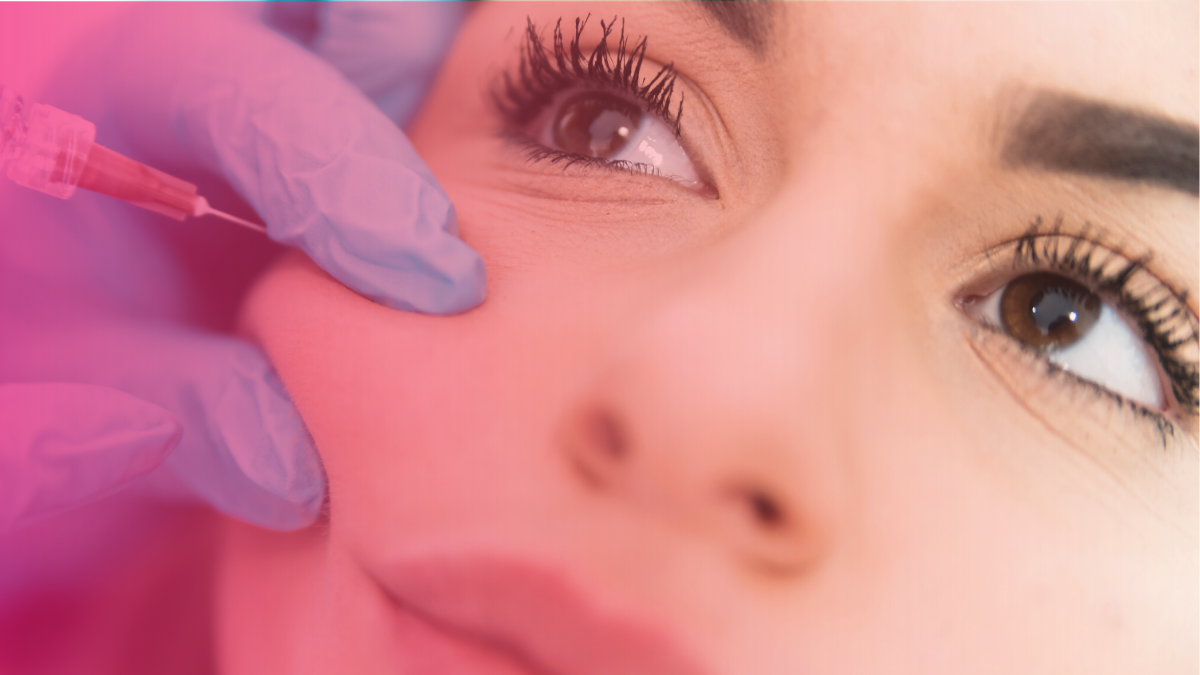
Cheek filler is priced by the syringe. Get Clear Beauty estimates it at $650 to $975 per syringe nationally, and $715 to $1,107 per syringe in Las Vegas. Most people treating their cheeks alone use one or two syringes, so a cheek treatment usually comes to about $650 to $1,950 at national rates.
You may have heard the rule that you need one syringe for every decade you have lived. It is a consultation rule of thumb rather than a clinical guideline, and it is widely misunderstood. It describes a whole face, not a pair of cheeks. A fifty-year-old having cheeks, under eyes, temples and jawline treated together might use around five syringes in total. That same person treating only the cheeks would usually use one or two. If you are quoted five syringes for cheeks alone on the strength of your age, ask why.
The injector who explained this to us is Erika Luren, a nurse practitioner who has worked in dermatology, aesthetics and wellness for about fifteen years. She owns Aura Aesthetics, a by-appointment clinic in the Las Vegas area, and Rolling Wellness, an online telemedicine practice. She joined us on the Get Clear Beauty Podcast to talk about cheek filler. She learned aesthetics inside dermatology, including assisting in surgery, which is where she says she learned what sits underneath the skin she now injects into.
What is cheek filler actually doing, and why does it help smile lines?
Most cheek filler is hyaluronic acid, which occurs naturally in your body, holds water, and declines as you age. The hyaluronic acid in filler is made by bacterial fermentation in a lab, not harvested from animals or from other people.
Prices vary by location and provider.
That decline is only a small part of the story. The fat pads in the face shrink, and they also appear to slide downward and forward, so volume that sat high on the cheek ends up lower. How much of midface aging is deflation and how much is descent is still debated among clinicians.
Underneath that, the facial skeleton changes. Erika compared this to osteopenia, which is an analogy rather than the same process, and the detail is more specific than cheekbones shrinking. What recedes is mostly the upper jaw beneath the cheek, while the eye socket widens. The cheekbone itself is relatively stable. The scaffolding your midface sits on moves backward, so the tissue above it has less support. Skin thins and loses collagen at the same time, and the ligaments holding the midface loosen. Erika made the wider point that bone loss is a whole-body process, which is one more argument for the vitamin D, calcium and weight-bearing exercise you are already being told to do.
This is also the answer to smile lines. The crease from the side of your nose to the corner of your mouth, the nasolabial fold, deepens partly because the cheek above it has deflated and dropped onto it. Restoring support higher up takes weight off the fold. Erika treats the cheek first for this reason, then places a small amount in the fold if a gap remains. Danielle came to cheek filler this way, bothered by the skin around her smile lines and treated in the cheeks.
Filler will not tighten loose skin, fix pigment, improve texture or lift the lower face. It replaces volume. Being clear about that is the best protection against the overfill spiral described below, because patients who expect filler to tighten skin keep adding filler that was never going to do it.
How many syringes do you need, and what does “one per decade of life” really mean?
The one-syringe-per-decade guideline appears in no product labeling, no consensus statement and no published dosing method. It began as a way to set expectations in a consultation.
Applied properly it covers full face rejuvenation. Erika described what she would look at on a fifty-year-old who has never had anything done: flattened cheeks, hollowing under the eyes and temples, and a jawline that has lost definition. Treating all of that is where five syringes comes from. Cheeks alone are a much smaller job, and Erika uses one to two syringes depending on how much volume has gone. That sits at the conservative end, so treat it as a common range rather than a ceiling.
What actually decides the amount is how much volume you have lost, how thick your tissue is, which product is used and how much lift it gives, what depth it goes to, and whether the plan is staged across sessions. It is decided on the face in front of the injector, not calculated from a birthday.
Erika named an honest tension here. Treating one area of a face that has changed everywhere can leave the result slightly out of step with the rest. Budget is real, so she asks what bothers the patient most and where the money buys the biggest improvement, then starts there.
How much does cheek filler cost?
Get Clear Beauty estimates cheek filler at $650 to $975 per syringe nationally. In Las Vegas, where Erika practices, our estimate is $715 to $1,107 per syringe. At one to two syringes, that is roughly $715 to $2,214 in Las Vegas at our estimated rates.
Erika charges $499 per syringe, below the bottom of our Las Vegas estimate. Filler pricing tracks the local market, Nevada is cheaper than California or New York, and she places herself in the middle of her own market. Two syringes at her price is $998. The same two syringes at the top of our Las Vegas estimate is $2,214. That gap is not a difference in the product. It is a difference in the market and the practice.
A per-syringe price is also not a total price. Midface correction is often staged across more than one session, and a touch-up at around four weeks is common. Establish all of this before you agree to anything:
- Is the price per syringe, and how many syringes do you expect to use?
- Is this one appointment, or do you expect to stage it?
- Is a follow-up review included, and is a touch-up included or charged separately?
- What would a correction cost if I am unhappy?
Hyaluronic acid, Radiesse or Sculptra: which one goes in your cheeks?
These three are not interchangeable. The differences decide how fast you see a result, how long it lasts, and what can be done if something goes wrong.
Hyaluronic acid fillers include Juvéderm, Restylane and the RHA line. They add volume immediately, and they are the only one of the three families that can be dissolved. Erika favors the RHA range and uses RHA 4, the firmest in that line, for deep structural support over the cheekbone.
Radiesse is calcium hydroxylapatite, not hyaluronic acid. It is a mineral-based gel that gives immediate volume from its carrier and also prompts your body to build collagen over the following months. It is not used in the lips, where it has a known problem with nodules, or in the nose.
Sculptra is poly-L-lactic acid, a collagen stimulator rather than a filler in the usual sense. It goes in watery and at first you see almost nothing, then your own collagen builds over several weeks to a few months. Erika finds it most useful for patients with diffuse volume loss and significant sun damage, which she framed as roughly fifty and over. Age is not really the criterion. The criterion is how much diffuse volume has gone and whether you accept a gradual result you cannot reverse. It is not used in the lips, under the eyes or in the nose.
How long each lasts. The episode had two of these backwards, so it is worth setting out plainly. Juvéderm Voluma XC is approved with results up to two years in the midface. Restylane Lyft and Contour run around twelve months, and RHA Dynamic Volume showed results through fifty-two weeks. Radiesse is commonly cited at twelve to eighteen months, and the claim that it lasts up to two years is not supported by its labeling. Erika also said patients with a fast metabolism break filler down sooner. Many injectors observe this and there is no controlled evidence behind it, so treat it as a possibility rather than a rule.
Which are actually approved for cheeks? A lot of cheek filler is off-label. That is legal, extremely common in aesthetics, and not by itself a warning sign. It means the product was approved after trials in a different area.
Products carrying an FDA indication for the cheek or midface include Juvéderm Voluma XC (2013), Restylane Lyft (2015), Restylane Contour (2021) and RHA Dynamic Volume (January 2026). Sculptra was approved in April 2023 for fine lines and wrinkles in the cheek region, which is a skin quality indication rather than cheek augmentation.
One naming point matters: RHA Dynamic Volume was previously called RHA 4 Mepi, and it is a different product from RHA 4. RHA 4 itself is approved for wrinkles and folds such as nasolabial folds, and Radiesse for wrinkles and folds, the hands and HIV-related facial fat loss, so both are off-label in the cheek. Ask which product is going in and whether it is being used on-label.
Where does the filler go, and why does placement matter?
Cheekbone augmentation usually means placing filler deep, down against the bone, where a firm product can rebuild support that has receded. The real rule is not skin thickness alone. It is matching the product’s firmness to the tissue layer it is going into.
Hyaluronic acid placed too close to the surface causes two visible problems: lumps and ridges, which is why thin skin needs deeper placement and why a firm product near the surface is the worst combination, and the Tyndall effect, a bluish-gray shadow that appears when the gel sits too superficially. Both are correctable by dissolving. Erika named the RHA line as one that can go more superficially, which is true of the line as a family but not of RHA 4, the firm one.
Worth asking about: whether your injector uses a needle or a cannula. A cannula is a blunt tube rather than a sharp point. It causes less bruising and lowers, without eliminating, the risk of entering a blood vessel.
What happens at the appointment, and what is the recovery?
Expect numbing. Erika uses a topical cream beforehand, and most modern fillers arrive from the manufacturer already mixed with a numbing agent, so the area becomes progressively more comfortable. That agent is usually lidocaine, which matters if you have ever reacted to a local anesthetic at the dentist.
Afterwards, expect swelling, possible bruising and tenderness. Erika warns Radiesse patients they will look puffier at first and that it settles over about two weeks. The reason is not that Radiesse swells more. Its carrier gel delivers full volume immediately and then resorbs, so the early result can look overcorrected and then settle.
Her aftercare instructions are to avoid lying face down for at least 48 hours and not to massage the area, because she has already placed the filler where she wants it. Both are standard and low risk to follow, and neither is strongly proven, so do not panic if you sleep on the wrong side once.
The massage instruction is product-specific. Sculptra is the exception. Sculptra patients are usually told to massage on a schedule for several days afterward, because it is part of how nodules are avoided. Follow the instructions you were given for the product you had.
On blood thinners, the general advice needs care. Erika suggested stopping anything that thins the blood beforehand. That is right for discretionary items and wrong as a blanket rule. Fish oil, vitamin E, ginkgo, high-dose garlic and over-the-counter anti-inflammatories taken for convenience can reasonably be paused for a few days, and alcohol is worth skipping for 24 hours. Never stop a prescribed blood thinner or antiplatelet medication for a cosmetic appointment. Stopping warfarin, a direct oral anticoagulant, clopidogrel or prescribed aspirin on your own carries a risk of stroke, heart attack or clot. Tell your injector you take one, and change nothing without your prescribing doctor’s approval.
On arnica. Erika recommends starting it five to seven days beforehand. Arnica is a long-standing habit among injectors and the evidence is thin and mixed. Trials in nose surgery found less bruising, trials in eyelid surgery found none against placebo, and no trial has shown it helps with dermal filler specifically. It is low risk, so it is a reasonable personal choice rather than a proven step. What does reduce bruising is a cannula instead of a needle, ice afterwards, skipping alcohol, and not booking within two weeks of an event.
Timing. Keep filler at least two weeks away from dental work, including a routine cleaning, and away from vaccinations, and do not have filler while you are unwell. The reason is in the next section.
Erika’s advice on protecting the result is retinol at night, vitamin C in the morning, and SPF 30 or higher daily. One correction to how this is often sold: good skincare does not make filler last longer. It protects your skin quality, which is a real and separate benefit.
What are the serious risks of cheek filler?
The episode focused on aesthetic outcomes, so this section is ours.
The rare but serious complication with any facial filler is vascular occlusion, where filler blocks or compresses a blood vessel and cuts off blood supply to the tissue it feeds. The midface carries arteries connecting back to the circulation around the eye, so it is treated as a higher-risk area. It is treatable when caught early.
Signs to watch for:
- Pain that is severe, out of proportion to what you were told to expect, or that starts as the numbing wears off and keeps getting worse. The anesthetic can mask pain at first, so no pain does not mean nothing is wrong.
- Skin that turns white or pale straight away over an area larger than the needle mark and does not pink back up.
- A blotchy, lacy, net-like purple or red pattern, often within fifteen to thirty minutes but sometimes hours later.
- A dusky, gray or bruise-like patch that spreads and does not behave like a normal bruise. A normal bruise comes up over hours, is soft, hurts when pressed and settles downward. This has a pattern to it and often hurts on its own.
- Skin in that patch that feels cool to the touch.
- Over the following days, blisters, pustules, crusting or a black scab.
- Anything involving the eye: blurred vision, a dark patch, a curtain coming down, double vision, loss of vision, eye pain, a drooping lid, severe headache, nausea or vomiting. This usually happens during the injection or within minutes.
What to do, and how fast:
- Any change in vision or pain around the eye is an emergency now. Call your injector and go to an emergency department with an eye specialist at the same time.
- Any skin sign means contacting your injector immediately, the same hour, day or night. Treatment works best within about four to six hours, and is still worth doing after that.
- "I will see if it looks better in the morning" is the wrong instruction, and it is exactly what a frightened person does at eleven at night. Make the call.
Before you book, ask three things: does the clinic keep hyaluronidase on site, what is the after-hours number, and what is the protocol if a vessel is blocked. Very few clinics publish this and every good one can answer it.
Delayed reactions are the other thing to know, and they are far less frightening. Weeks or months after treatment, sometimes more than a year, a firm or tender lump can appear over an old filler site. It happens in well under one percent of patients, and most people who get one report a trigger first: dental work, a viral illness, a vaccination or a stomach upset. It is usually treatable and it is not proof of bad filler or a bad injector. Go back to your injector or to a dermatologist, and do not let anyone inject more filler over it.
Can cheek filler migrate, and can it be dissolved?
Migration is not only a lip problem. Erika confirmed cheek filler can move, and named two causes: aftercare, meaning lying on your face and massaging the area, and placement that is too superficial. Filler does travel along tissue planes, and imaging has found it some distance from where it was placed. Something else looks like migration and is not. Persistent puffiness under the eyes and across the upper cheek is often fluid rather than filler, caused by obstructed lymphatic drainage, and it is treated differently. Have it assessed rather than assuming the answer is to dissolve.
Dissolving is the most important practical difference in this article.
Hyaluronic acid filler can be dissolved with hyaluronidase, sold under brand names including Hylenex. Erika described the process honestly: it stings, it usually takes more than one appointment, and you wait at least two weeks after each round before judging what is left. Things she did not mention are worth knowing. It temporarily breaks down some of your own natural hyaluronic acid, which recovers, it cannot be aimed perfectly so it can work unevenly, allergic reactions are rare but real, and dissolving can reveal laxity the filler had been hiding.
Radiesse and Sculptra cannot be dissolved. Hyaluronidase does nothing to either, and there is no reliable reversal agent for either. If you are unhappy, the realistic options are waiting a year or more for the product to break down, or procedures such as steroid injection, dispersion or surgical removal, none of which is precise.
This has a second consequence that matters more than the cosmetic one. If a blood vessel is blocked, hyaluronidase is the antidote, and it only works on hyaluronic acid. With a biostimulator there is no antidote. The sensible conclusion for most readers is to start with hyaluronic acid for a first cheek treatment, and consider a biostimulator later, once you know how you respond.
How do you avoid the overfilled look?
This is the part Danielle most wanted answered, because the overfilled celebrity face is why many people never book at all.
Erika has worked with celebrity and model clients, and her answer was blunt. Overfilling usually happens because the patient asks for it. Patients point at a dip and want it gone, then another, then another. Chasing every hollow produces a face that reads as puffy. Some wrinkling has to stay for a face to look like a face.
Two things follow. The first is to accept that faces are not symmetrical and yours will not end symmetrical. Erika sees patients compare one side to the other and ask for more on the smaller side, which makes the other side the smaller one, and on it goes. Danielle’s comparison was the eyebrow advice everyone heard at thirteen: sisters, not twins.
The second is that a big name is not proof of skill. Erika was direct about having seen well-marketed injectors up close and deciding she would not let them touch her face. She also raised a real supply problem. There are roughly 11,500 med spas in the United States against about 13,700 McDonald’s locations, and med spas are growing by around a thousand a year. There is no federal standard for injector training, scope of practice varies by state, and people enter the field anywhere from a weekend course to years of supervised work. Her view is that it takes several years of hands-on experience to become genuinely good.
So ask. How long have you been injecting? How many times have you used this specific product? A confident provider will answer plainly. And listen to the plan you are given. Danielle called herself a self-proclaimed know-it-all and made the point that the thing to leave at the door is your ego.
Who is not a good candidate for cheek filler?
Erika’s clearest example was significant sun damage. She sees patients who have spent decades outdoors whose skin has become loose, lax and leathery. For them, filler alone disappoints. The volume goes in underneath skin too slack to show it, so little visibly changes. The trap is adding more and more filler until the result is puffy while the skin is still loose. Her approach is to treat it as a layered problem, combining volume with treatments aimed at the skin itself, including lasers, microneedling and a collagen-building skincare routine.
There is a point past which none of that is the answer. Erika tells those patients plainly that they need a plastic surgeon, and noted that many do not want to hear it and ask her to try anyway. Being told no is a sign of a good provider, not a bad one.
Significant weight loss creates a related situation, and she sees a lot of it through her weight loss practice. Losing a large amount of weight, including on a GLP-1 medication, shrinks the facial fat pads along with the rest. Volume can be replaced. She finds the dominant problem after major weight loss is usually loose skin rather than lost volume, though how that splits depends on your age, your skin quality, and how fast the weight came off. One practical point she did not raise: wait until your weight has been stable for a while, or you are paying to chase a moving target.
Filler should also be postponed or avoided if any of these apply, and tell your injector about all of them: an active infection, breakout or cold sore near the site; a known allergy to hyaluronic acid or to local anesthetics; pregnancy or breastfeeding, which are not studied; an active autoimmune condition or immune-suppressing treatment; a bleeding disorder or a blood thinner; a history of keloid scarring, particularly for the biostimulators; and recent isotretinoin.
Find providers near you
You can compare cheek filler prices and find providers near you on our cheek filler price guide. If you are in the Las Vegas area, Erika Luren sees patients by appointment at Aura Aesthetics, and you can find her booking details and her telemedicine practice at rollingwellness.life.
Wherever you book, ask four things before you agree to anything: how many syringes you will need and whether the plan is staged, which product is going in and whether it can be dissolved, whether the clinic keeps hyaluronidase on site, and what the after-hours number is if something goes wrong.
Compare Cheek Filler providers and estimated prices near you.
Cheek Filler cost guide →This article is for general education about aesthetic treatments and pricing. It is not medical advice and is not a substitute for a consultation with a licensed provider. Always confirm current pricing and suitability directly with a provider before booking.
New aesthetic treatment blogs every week, sent straight to your inbox.
Subscribe on Substack →
Comments
Comments are reviewed before they appear. For medical questions, please consult a licensed provider — we cannot give medical advice here.
Loading comments…