How Much Does CO2 Laser Resurfacing Cost?
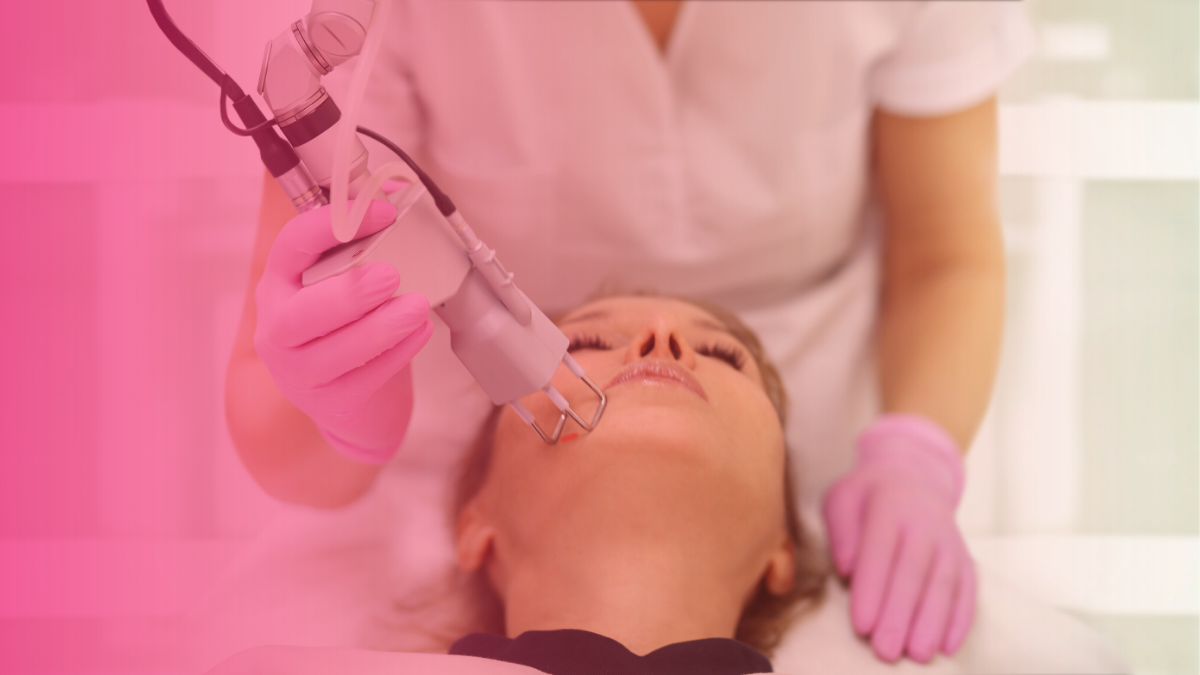
If you have searched CO2 laser resurfacing and found prices ranging from under $2,000 to well over $6,000, that spread is real and it is explainable. The number depends far less on the clinic’s brand than on how deeply you are being treated.
A light fractional pass and a full-field ablative treatment are sold under the same three letters, and they are different procedures with different downtime, different risk, and different results. Once you understand which one you are being quoted, the price range stops looking arbitrary. Here is what drives it.
What is CO2 laser resurfacing, and what does it treat?
A CO2 laser emits light at 10,600 nm, a wavelength strongly absorbed by water. Because skin is mostly water, the beam vaporizes tissue on contact. That is what ablative means: it removes the outer layer of skin and delivers residual heat that contracts collagen, and your body rebuilds over the following months.
Prices vary by location and provider.
It genuinely corrects fine and moderate wrinkles, atrophic acne scarring, surgical and traumatic scars, sun damage, rough texture, and enlarged-looking pores. The improvements that patients rate most highly tend to be textural, meaning the surface quality of the skin rather than any single line.
It does not correct sagging. Resurfacing is a different mechanism from lifting, so jowls and neck laxity need another treatment or surgery. It does not restore lost volume, which is a filler or fat-grafting question. And it can worsen melasma, so that is a conversation to have before booking anything. The clean way to think about it is that CO2 changes the surface and quality of your skin without changing the shape of your face.
What is the biggest price driver?
Fully ablative, sometimes called full-field, removes the entire treated surface. Healing happens from structures deep in the skin, which is slower and riskier, but delivers the strongest result available short of surgery.
Fractional splits the beam into thousands of microscopic columns, treating roughly 5 to 40 percent of the surface and leaving untreated bridges of skin between them. Those bridges are reservoirs of healthy tissue that speed healing considerably and lower the risk.
| Fully ablative | Fractional | |
|---|---|---|
| Surface treated | 100% | ~5–40% per pass |
| Skin healed over | 10–14+ days | 5–7 days |
| Lingering redness | 2–3 months | Days to ~4 weeks |
| Sessions | Usually 1 | Usually 1–3 |
| Result per session | Strongest available | Moderate to strong |
Here is the part that rarely reaches patients: fractional CO2 is a range, not a setting. A light fractional pass and an aggressive one are different treatments with different downtime at different prices. Two clinics quoting you fractional CO2 may be selling genuinely different things. Ask about depth and density rather than the device name.
What does a CO2 laser quote actually include?
Roughly in order of impact:
- Depth and density — the single biggest factor.
- Area treated — full face costs more than perioral only; adding neck and chest raises both price and risk.
- Anesthesia — topical numbing versus nerve blocks versus IV sedation. Sedation can add $500 to $1,500 or more and often brings a facility fee.
- Provider and setting — aggressive ablative work should be led by a board-certified dermatologist or plastic surgeon.
- Geography — major metros run higher.
- Number of sessions — one for full-field, often two or three for fractional.
- What is bundled — post-procedure kit, follow-ups, prescription antivirals, touch-ups. Ask.
The bundled items are where quotes diverge most confusingly. A CO2 recovery genuinely requires occlusive ointment, gentle cleanser, sunscreen, and often a prescription antiviral and sometimes an antibiotic. Some practices build all of that into the fee, and others hand you a shopping list on the way out. Follow-up visits are the same story. When two quotes sit $600 apart, the gap is frequently aftercare rather than the laser itself.
How much does CO2 laser resurfacing cost?
On our platform CO2 laser resurfacing starts at $2,000 per session. For context, the American Society of Plastic Surgeons puts ablative resurfacing at roughly $2,330 on average. Full-face fractional commonly lands between $2,000 and $4,000, and full-field with sedation between $3,000 and $6,000 or more. Treating a small area alone can come in below that floor.
These are typical national ranges rather than fixed prices, and they move with market and provider. A perioral-only treatment, meaning the lines around the mouth, is one of the more common ways patients access CO2 at a lower total cost, because the area is small and often the area that bothers them most. Multiple lighter fractional sessions and one aggressive session can reach comparable places at comparable total cost, so it is worth asking your provider to price both paths rather than assuming the cheaper single quote is the cheaper plan.
Consultation fees are the other line worth clarifying up front. Many dermatology and plastic surgery practices charge for the initial visit, often in the range of a routine specialist fee, and many apply it toward the procedure if you book. Asking whether the fee is credited turns a comparison between three practices from an expensive exercise into a reasonable one. If a practice offers a free consultation for an ablative laser, ask who conducts it, because a consultation with a treatment coordinator rather than the person who will operate the laser is a sales conversation with a different purpose.
Is a carbon laser facial the same as a CO2 laser?
This confusion is common enough to be worth its own section, because the names sound alike and the treatments are not remotely similar.
A carbon laser facial, also sold as a carbon peel or Hollywood peel, uses a Q-switched Nd:YAG laser at 1064 nm fired over a layer of carbon lotion. The carbon absorbs the energy and is blasted off, taking surface oil and dead cells with it. Nothing living is ablated.
| Carbon laser facial | CO2 resurfacing | |
|---|---|---|
| Ablative? | No | Yes |
| Downtime | Essentially none | 5–14+ days |
| Treats | Oiliness, congestion, pores, dullness | Wrinkles, scars, sun damage, texture |
| Typical price | ~$150–$400/session, series of 4–6 | $2,000+/session |
The price gap alone tells you these are different categories. A carbon facial is a reasonable treatment for oily, congested skin and is generally well tolerated across skin tones. It will do nothing for acne scarring. Book the wrong one and you will either spend money on scars that do not budge, or be blindsided by two weeks of healing you did not plan for.
What does the first week really look like?
Days 1 to 3 are peak swelling. After full-face treatment the eyes can swell nearly shut. The skin weeps continuously and needs occlusive ointment and soaks around the clock. This is the part people are least prepared for, and it is worth arranging for someone to be with you for at least the first two days.
Practical preparation makes a large difference here. Fill every prescription before the procedure rather than after, because a pharmacy trip on day two is unpleasant and you may not be able to see well enough to drive. Stock the ointment, gentle cleanser, distilled water or the soak solution your provider specifies, clean towels, and soft pillowcases in advance. Arrange a ride home, arrange help for the first 48 hours if you have children or pets, and clear your calendar honestly rather than optimistically. Patients who plan the week as though they will be functional on day three are the ones who end up most distressed.
Days 3 to 5, oozing slows and crusting begins. Itching is normal and is a healing sign.
Days 5 to 7, fractional patients typically have new skin, pink and tight but no longer raw. Makeup is usually possible around day 7 to 10. Full-field patients reach that point closer to day 10 to 14.
Weeks 2 through 12 are pink to red skin fading gradually. Fractional fades within weeks. Full-field commonly stays visibly red for two to three months, and mineral makeup or a color-correcting product becomes the practical workaround.
Months 3 to 6 is when collagen remodeling finishes and you see the actual result. Judging the outcome at week three means judging an incomplete picture.
Healing skin looks dramatic by design, so it helps to know which signs sit outside the expected range. Contact your provider promptly for pain that increases after the third day rather than easing, redness and warmth spreading beyond the treated area, thick yellow or green discharge, a foul smell, a fever, or clustered painful blisters, which can signal a herpes outbreak even in a patient taking an antiviral. A patch of skin that turns dusky, grey, or hard rather than pink also warrants a same-day call. None of these are common, and every one of them is easier to manage early, which is why providers would rather hear from you than have you wait for the next scheduled follow-up.
This is not a lunchtime procedure and it cannot be concealed. Booking it three weeks before a wedding is a mistake, and most providers ask for a clear calendar of at least two weeks for fractional and considerably longer for full-field.
How long do the results last, and how many sessions are typical?
Full-field CO2 is usually a single treatment, and the improvement it produces is long-lasting, with many patients describing benefit that holds for years. Fractional is more often a series of one to three sessions spaced a month or more apart, with the combined result approaching what a single aggressive treatment achieves.
Longevity is not the same as permanence. The laser does not stop aging, and sun exposure is the fastest way to undo what you paid for. Daily broad-spectrum sunscreen after healing is the single highest-value habit for protecting the result, and most providers also ask patients to stay strictly out of the sun for several weeks after treatment while new skin is still vulnerable to pigmentation.
Acne scarring in particular tends to need more than one pass to reach a satisfying place, and improvement is measured in degrees rather than erasure. Individual response varies with skin type, scar depth, and how the skin heals, so your provider is the right person to set a realistic target.
Who should not have CO2 laser resurfacing?
Not a candidate: anyone with an active infection in the area, active inflammatory acne, or an active cold sore. Pregnancy and breastfeeding mean deferring. Recent sun exposure or self-tanner substantially raises the burn and pigmentation risk, so several weeks of strict sun avoidance beforehand is standard. A history of keloid or hypertrophic scarring needs specialist judgment.
Isotretinoin. The 2017 consensus from the American Society for Dermatologic Surgery revised the old blanket rule, but full-face ablative resurfacing is still advised against within six months of use. Disclose it and let your provider decide rather than clearing yourself.
Antiviral prophylaxis is not optional. Ablative resurfacing can reactivate dormant herpes simplex, and an outbreak across freshly treated skin can cause scarring. Standard care is an oral antiviral started the day before and continued through healing, and it is generally given to ablative patients rather than only to those with a known cold sore history, since the virus is common and often silent. If a practice offering full-face CO2 never mentions antivirals, that is worth noticing.
Skin tone. Post-inflammatory hyperpigmentation after ablative CO2 is reported in a substantial proportion of patients with Fitzpatrick IV and above, and in some published series it has been described in the large majority of them. That pigmentation is usually temporary and treatable. Hypopigmentation from over-aggressive treatment can be permanent, which is the strongest argument for conservative settings. If you have deeper skin, the most protective factor is a provider with documented experience treating skin like yours, plus a test spot before committing to a full face.
Neck, chest and hands carry higher risk than the face and require lower settings, because they have far fewer structures to heal from. Facial settings applied to the neck cause scars.
Does the device brand matter?
You will see CO2RE, AcuPulse, UltraPulse and eCO2 advertised. These are all capable fractional CO2 platforms, and the differences between them are real to an operator and marginal to your result.
What determines your outcome and your complication rate is settings, depth, density, number of passes, and patient selection. A conservative operator on a mid-tier device beats an aggressive one on a flagship. Marketing that leads with a device name and never mentions the person running it has the emphasis backwards.
What should you ask before booking?
Ask whether you are being treated fractionally or full-field, and at what depth and density. Ask how many sessions your specific concern realistically needs, and whether the price quoted is per session or for the course. Ask what is included: follow-ups, aftercare products, prescriptions, touch-ups.
Ask how many patients with your skin tone they have treated with this device, and whether they recommend a test spot. Ask who will be operating the laser and what their training on it is. Ask what their protocol is if an infection or unexpected pigmentation develops during healing. And ask what your realistic downtime is rather than the best case, because the answer to that question tells you a great deal about how straightforward the rest of the conversation will be.
Find providers near you
Get Clear Beauty shows real prices from providers so you can compare cost, credentials, and what is actually included before you book. If you are comparing quotes, see real CO2 laser prices from providers near you on our CO2 laser price guide.
Compare Co2 Laser providers and estimated prices near you.
Co2 Laser cost guide →This article is for general education about aesthetic treatments and pricing. It is not medical advice and is not a substitute for a consultation with a licensed provider. Always confirm current pricing and suitability directly with a provider before booking.
New aesthetic treatment blogs every week, sent straight to your inbox.
Subscribe on Substack →
Comments
Comments are reviewed before they appear. For medical questions, please consult a licensed provider — we cannot give medical advice here.
Loading comments…