HydraFacial vs Regular Facial: Is It Worth the Upgrade?
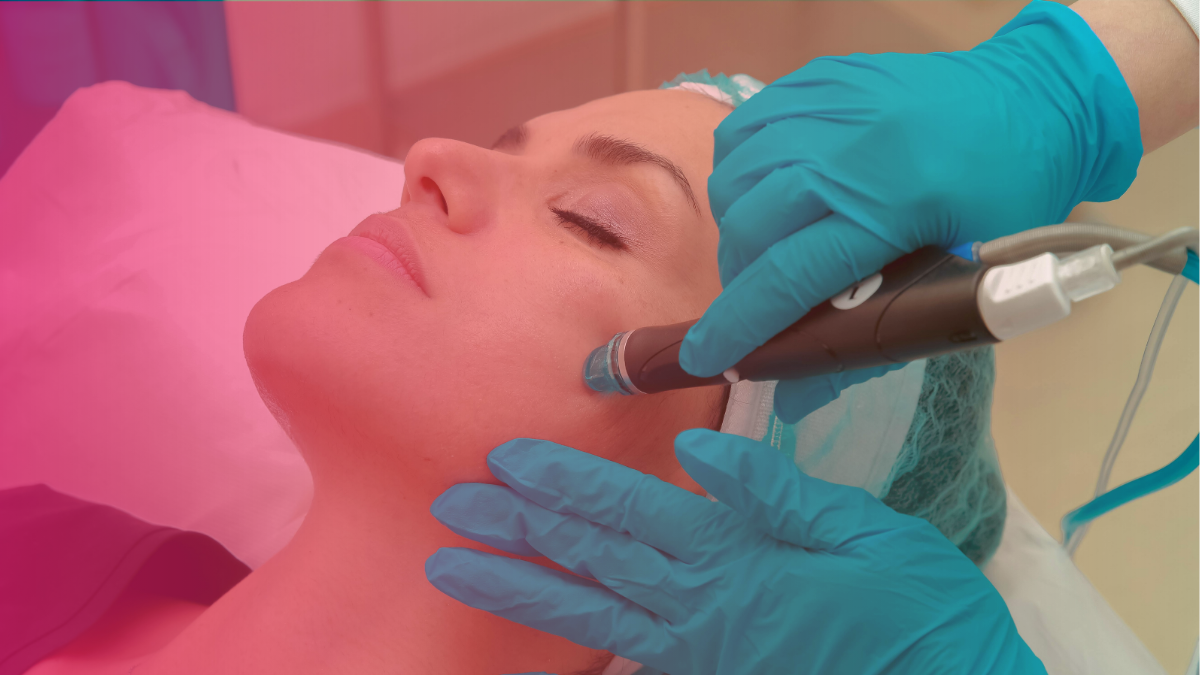
A HydraFacial costs roughly twice what a standard spa facial does — $150 to $225 per session nationally, against $60 to $150 — and whether that gap is worth paying depends entirely on what you want the appointment to accomplish. One is a device-driven treatment built to produce a specific, repeatable result. The other is a category so broad that two appointments at the same price can deliver completely different outcomes.
Here is what separates them, what the extra money actually buys, and how to tell which one your skin needs.
What is the difference between a HydraFacial and a regular facial?
A HydraFacial is a patented treatment performed with a specific device, and that device is the reason the results are consistent. It uses a spiral suction tip that cleanses, exfoliates, extracts, and infuses serum in a single pass, and a spa cannot replicate it with off-the-shelf equipment. The protocol is standardized, so a HydraFacial in one city closely resembles a HydraFacial in another.
Prices vary by location and provider.
A "regular facial" is not one treatment. It is a category covering everything from a relaxing cleanse-and-mask to a genuinely clinical session with a skilled esthetician using professional-grade acids and manual extractions. The best spa facials are excellent and can rival a HydraFacial for glow. The weakest are pleasant and accomplish very little. That variability is the real distinction: with a HydraFacial, a large part of what you are paying for is predictability.
What actually happens during a HydraFacial?
The treatment runs in three stages and takes about 30 minutes.
Cleanse and peel. A tip carrying a mild glycolic and salicylic acid blend passes over the skin, lifting dead surface cells and loosening the debris sitting inside your pores. This is gentler than a traditional chemical peel — it resurfaces the very top layer without the sting or the visible shedding that follows a medium-depth peel.
Extract and hydrate. This is the step people notice. Instead of a technician pressing on your skin with fingers or a metal loop, the device applies gentle suction to draw congestion out of the pore. Many clinics show you the collection canister afterward. It is unglamorous and weirdly satisfying, and it produces most of the visible change in how your pores look.
Fuse and protect. With the pores clear, a final pass infuses antioxidants, peptides, and hyaluronic acid into skin that can now absorb them properly. Sequence matters here. The same serum applied to congested skin does considerably less.
Most clinics offer add-ons: a targeted booster serum aimed at pigmentation, fine lines, or hydration, LED light therapy, or lymphatic drainage. These typically add $50 to $150 to the session, and they are the single biggest reason two HydraFacial quotes in the same city can differ so widely.
What happens during a regular facial?
A standard facial usually follows a familiar arc — cleanse, steam, exfoliate, extract manually, apply a mask, then finish with moisturizer and sunscreen. Sessions run 45 to 75 minutes, so the appointment is often longer than a HydraFacial even when the active treatment time is shorter.
The quality hinges almost entirely on the esthetician. A skilled one selects acids and enzymes suited to your skin, performs thorough extractions without traumatizing the surface, and sends you home knowing what to change in your routine. A less experienced one applies the same protocol to everyone who sits in the chair. Nothing about the price on the menu tells you which you are booking, which is why a personal recommendation matters far more for a spa facial than it does for a HydraFacial.
Is a HydraFacial worth the extra cost?
For congestion, dullness, and dehydration, it usually is. The device does the work, so the result does not depend on whether you happened to book the best esthetician on the schedule. You leave with visibly clearer pores, plumper skin, and brightness that a standard facial does not reliably produce on the first attempt. If you are treating yourself before a wedding, a photoshoot, or any date where you cannot risk an unpredictable outcome, the premium buys certainty, which is worth real money.
For general maintenance on skin that is already in reasonable shape, the case is weaker. A well-chosen facial with an esthetician you trust, at $60 to $150, may serve you just as well and leave budget for the treatments that actually correct problems.
The upgrade earns its price when you have a specific outcome in mind and a date attached to it. It earns it less when you simply want an hour of quiet.
What does a HydraFacial cost, and what changes the price?
The $150 to $225 range covers a standard session, and several things move a quote within it or above it.
Your metro. Aesthetic pricing tracks commercial rent closely. The same 30-minute treatment costs meaningfully more in Manhattan or Los Angeles than in a mid-size market, which is why a national average is only a starting point.
Boosters and add-ons. A base session with no extras sits at the bottom of the range. Add a booster serum and LED and you can approach or pass $400. When you compare two quotes, confirm you are comparing the same treatment, because "HydraFacial" on a menu can mean either one.
Who performs it. A session in a medical practice with a nurse or a physician on site is generally priced above one at a day spa.
Packages and memberships. Because the treatment works best repeated, most clinics sell courses of three to six sessions at a discount, and monthly memberships are common. A package brings the per-session price down, though it commits you upfront — worth weighing if you have not had the treatment before.
This is exactly the kind of price spread that is hard to research, because most practices publish nothing and ask you to call. Comparing real numbers before you book is the difference between paying a fair rate for your area and paying whatever the first practice quotes.
How long do HydraFacial results last?
Most patients see their best results for five to seven days, with some brightness lingering closer to two weeks. There is no downtime and no recovery period, so the treatment fits around ordinary life in a way that a peel or a laser does not.
Because the effect fades, HydraFacial functions as maintenance rather than a one-time correction. Patients who book monthly tend to see baseline congestion and tone improve over several months in a way a single appointment cannot demonstrate. If you are judging the treatment on one session, judge it on the week that follows, not on month three.
A regular facial can produce a comparable immediate glow. Extractions tend to be less thorough than the suction used in a HydraFacial, so pore congestion typically returns sooner.
How often should you have a HydraFacial?
Monthly is the common cadence, and it lines up with the roughly 28-day cycle over which surface skin cells turn over. Some patients with heavier congestion start every two to three weeks for the first couple of months and then settle into a monthly rhythm.
More frequent is not better. Over-exfoliating compromises the skin barrier and can leave you with sensitivity, redness, and the dullness you were trying to treat. If your skin feels tight, stings when you apply your usual products, or looks pink for days afterward, space the sessions further apart and tell your provider.
Who should get a HydraFacial?
It suits patients with congested or dull skin who want visible improvement with no recovery time. It is a strong choice ahead of an event. Mild texture concerns, early dehydration, and skin that responds well to regular professional cleansing all tend to do well with repeated sessions.
It is not appropriate during an active rosacea flare, on open wounds or active cold sores, on sunburned skin, or soon after a resurfacing treatment. If you have rosacea, are pregnant, or have taken isotretinoin recently, raise it at booking rather than at the appointment — your provider may adjust the protocol, skip the peel step, or ask you to wait.
What will a HydraFacial not do?
This is the part worth being clear about, because it decides whether you spend your money well.
A HydraFacial does not treat significant pigmentation, melasma, acne scarring, or established wrinkles. It works at the surface. Those concerns sit deeper and need treatments that reach that depth — chemical peels, microneedling, or laser resurfacing, each with real downtime and a higher price attached.
It also does not resolve active acne. It can help with the congestion and blackheads that accompany mild breakouts, but inflammatory or cystic acne is a medical condition that needs a medical plan.
Patients sometimes book a course of HydraFacials hoping to fix a problem the treatment was never designed for, then conclude that aesthetics does not work for them. The treatment is genuinely good at what it does. The trouble starts when it is sold as something more.
What should you ask before booking?
A few questions separate a fair appointment from a disappointing one.
- What exactly is included at this price, and what are the add-ons? This is the question that makes two quotes comparable.
- Who performs the treatment, and what is their training? The device standardizes much of the outcome, but technique and judgment still matter.
- Given my skin, is this the right treatment, or would something else serve me better? A provider willing to talk you out of a booking is worth returning to.
- How many sessions would you expect before I see the change I want? The answer should be specific and should acknowledge that maintenance is ongoing.
- What is the total cost if I do the full course? Ask before you commit to a package, not after.
How does a HydraFacial compare to a peel or microneedling?
These are the three treatments patients most often weigh against each other, and they sit at different depths.
A light chemical peel ($100 to $150 in most markets) works chemically rather than mechanically, and a peel can reach pigment and tone in a way a HydraFacial does not. The trade is a few days of flaking and a stricter sun-protection window afterward.
Microneedling ($300 to $450 per session) creates controlled micro-injuries to trigger collagen production, so it treats texture, pores, and shallow scarring at a level no surface treatment reaches. It also involves numbing cream, a day or two of looking wind-burned, and a series of three to six sessions before the result is fair to judge.
A HydraFacial sits above both in gentleness and below both in depth. Nothing is being injured, so nothing has to heal, which is exactly why it produces no lasting structural change on its own.
Many patients end up using them together rather than choosing: a HydraFacial monthly for maintenance and clarity, with a peel or a microneedling series booked when there is a specific problem to correct. A provider who maps that sequence for you, rather than selling whichever treatment is on promotion, is the one worth staying with.
Does a HydraFacial help with acne?
Partly, and the distinction matters before you spend money on a course.
For comedonal acne — blackheads, whiteheads, and the congestion that makes skin look bumpy under good light — the extraction step genuinely helps, and the salicylic acid in the peel step is the same ingredient most over-the-counter acne products rely on. Patients with mildly congested skin often see real improvement across a few monthly sessions.
For inflammatory acne, the papules and pustules that are red and sore, results are mixed. Some patients find the deep cleanse settles things; others find any manipulation of active lesions makes them angrier for a few days.
For cystic acne, a HydraFacial is the wrong tool. Cystic acne is a medical condition that responds to prescription treatment, and a course of facials delays the appointment that would actually help. A good provider will tell you this directly and refer you rather than book you.
Find providers near you
If you want to see what patients actually pay in your area rather than calling five practices for quotes, the HydraFacial cost guide shows typical pricing by metro and what to confirm at your consultation. Get Clear Beauty exists to put those numbers in front of you before you book, so you can compare treatments and providers on real prices instead of guesswork.
Compare Hydrafacial providers and estimated prices near you.
Hydrafacial cost guide →This article is for general education about aesthetic treatments and pricing. It is not medical advice and is not a substitute for a consultation with a licensed provider. Always confirm current pricing and suitability directly with a provider before booking.
New aesthetic treatment blogs every week, sent straight to your inbox.
Subscribe on Substack →
Comments
Comments are reviewed before they appear. For medical questions, please consult a licensed provider — we cannot give medical advice here.
Loading comments…