RF Microneedling for Surgical Scars: Why Week Six Is the Window
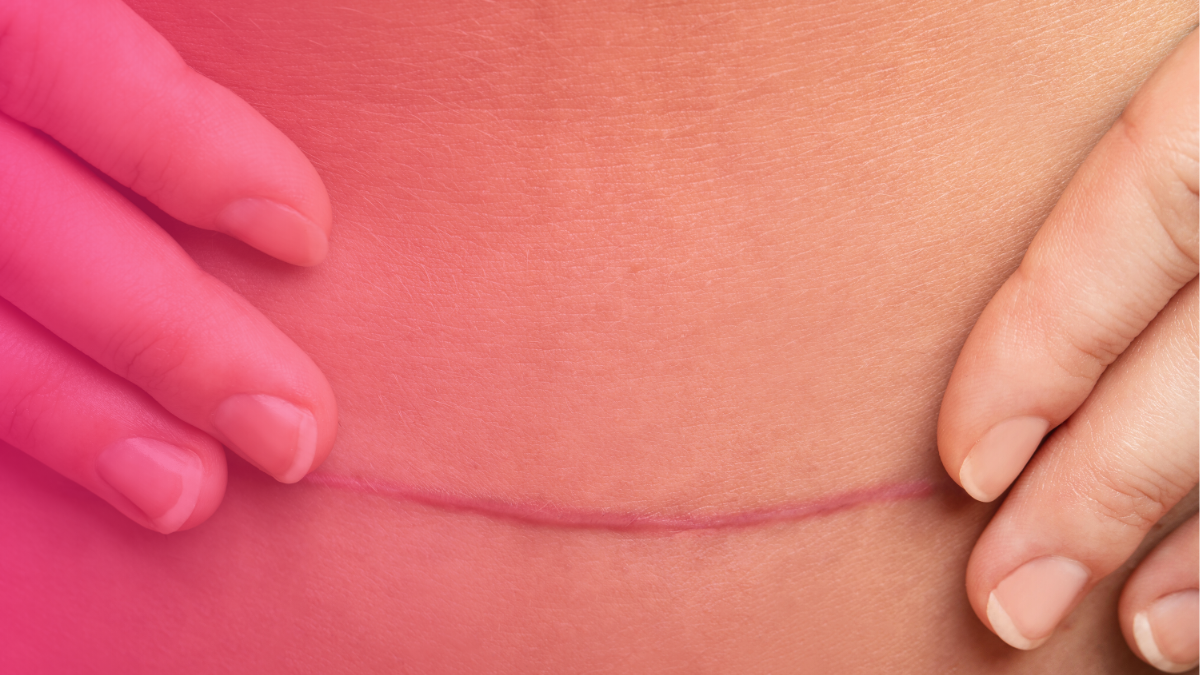
Plenty of people want a tummy tuck or a breast reduction and hesitate over one thing: the scar. On the Get Clear Beauty Podcast, we talked with Dr. Amir Ghaznavi, a dual board-certified plastic and reconstructive surgeon at AMG Plastic Surgery in Northern Virginia, who occupies an unusual position in this conversation. He creates surgical scars and he treats them afterward, so he knows the full history behind every scar he works on, including the tension on the wound and the patient's healing profile. Here is what he explained about using RF microneedling on surgical scars.
What RF microneedling actually does
The microneedles create a controlled injury to the skin, a process clinicians call percutaneous collagen induction. That injury starts the body's inflammatory process and prompts it to produce collagen. The radiofrequency component adds heat, which stimulates even more collagen formation. Together, they restart the process that determines how a scar ultimately looks.
Prices vary by location and provider.
Why week six is the window
This was the most useful part of the conversation. A scar is not a fixed thing; it goes through a remodeling process over months. In the first weeks after surgery, the body proliferates cells and lays down collagen quickly, but that early collagen is disorganized. Around six weeks, the body begins swapping that disorganized type 3 collagen for organized type 1 collagen. That transition is exactly what Dr. Ghaznavi aims to catch.
Treat too early and the proliferation phase has not finished tapering off. Wait until nine months and the remodeling phase is essentially over, which makes it far harder to restart. He noted this timing is not arbitrary and has been studied in the plastic and reconstructive surgery literature.
The practical takeaway: if you are considering scar treatment after surgery, the conversation with your surgeon belongs at about the six-week mark, not a year later when you have decided you dislike the scar.
Which scars respond, and which do not
Scars that respond well are depressed or atrophic ones, including acne scars, along with scars that have poor texture, persistent redness, or have widened.
Scars that are poor candidates include keloids, which he was emphatic about. If you have a keloid, or a strong personal history of keloiding, microneedling the area can trigger the same inflammatory process again. Hypertrophic scars are different from keloids and usually need combination therapy, such as a steroid injection alongside another modality. He was also clear that RF microneedling cannot fix a mechanical problem: a scar pulled apart by excessive tension, or one placed too high after a tummy tuck, is a matter of technique and positioning, not collagen remodeling.
Location matters as well. Scars on the sternum or shoulder tend to heal poorly, while the scar under the breast and the vertical breast scar generally heal well. For an abdominoplasty, he pointed out that a scar sitting right at the waistband can be constantly irritated by clothing, which keeps it inflamed.
Skin tone and the hyperpigmentation risk
RF microneedling is often described as the safer option for deeper skin tones compared with a laser, since a laser targets pigment and struggles when the whole background is pigmented. Dr. Ghaznavi agreed, with an important caveat. Because RF microneedling works through heat, too much energy at too great a depth can cause hyperpigmentation in darker skin. Sunbathing shortly before a session compounds the risk, since the melanocytes are already activated.
His advice to patients is direct. Your provider should know your Fitzpatrick skin type and be able to discuss it. If that terminology is unfamiliar to them, consider a second opinion.
The device matters less than the person holding it
Morpheus8 dominates the conversation largely because InMode markets it well, but there are several RF microneedling devices, including Secret RF, Potenza, and the Lumenis Legend Pro that he uses. His analogy was golf clubs and tennis rackets: conceptually the devices do the same thing, and the result comes down to the operator knowing needle depth, whether to use insulated or uninsulated needles, and the right protocol.
Needle depth also drives comfort. Deeper and larger needles hurt more, and he favors ultra-thin needles at one millimeter because most scar tissue sits in the upper layers of skin. Topical numbing helps, and some practices offer nitrous oxide, which does not remove the pain so much as create distance from it.
What a realistic course looks like
First, the honest part: scars never disappear. They fade, flatten, and become less noticeable, but the scar remains. Any provider promising otherwise is overselling.
His protocol is three sessions beginning at six weeks post-surgery, spaced roughly four to six weeks apart, with each session taking about thirty minutes. Patients typically see less color, a flatter scar, and faster fading around three to six months after surgery. The size of the scar does not change the number of sessions.
At his practice, that course of three sessions is packaged at $3,600, which includes the adjuncts, wound care, and pre- and post-treatment care. Pricing varies considerably by practice and region.
What helps a scar outside of treatment
Two baseline habits he gives every patient. The first is sun protection, since UV exposure activates the cells that produce pigment and makes a scar more noticeable. The second is moisturizing, because scar tissue lacks the oil-producing cells found in normal skin and a dry scar stays inflamed longer. He also considers silicone strips one of the most reliable additions, since they hold moisture in the scar rather than letting it evaporate.
A red flag worth remembering
If a provider tells you every scar is a candidate for RF microneedling, Dr. Ghaznavi suggests they are selling rather than assessing. Some scars need excision. Some need only silicone strips and time. A good assessment tells you which one you have.
Thank you to Dr. Amir Ghaznavi for joining us. You can find him at AMG Plastic Surgery in Herndon, Virginia, at amgplasticsurgery.com and on Instagram at @amgplasticsurgery.
If scar treatment is on your list, compare real RF microneedling prices from providers near you on our RF microneedling price guide.
Compare Rf Microneedling providers and estimated prices near you.
Rf Microneedling cost guide →This article is for general education about aesthetic treatments and pricing. It is not medical advice and is not a substitute for a consultation with a licensed provider. Always confirm current pricing and suitability directly with a provider before booking.
New aesthetic treatment blogs every week, sent straight to your inbox.
Subscribe on Substack →
Comments
Comments are reviewed before they appear. For medical questions, please consult a licensed provider — we cannot give medical advice here.
Loading comments…