What Age Is Best for Otoplasty, and Does It Work on Adults?
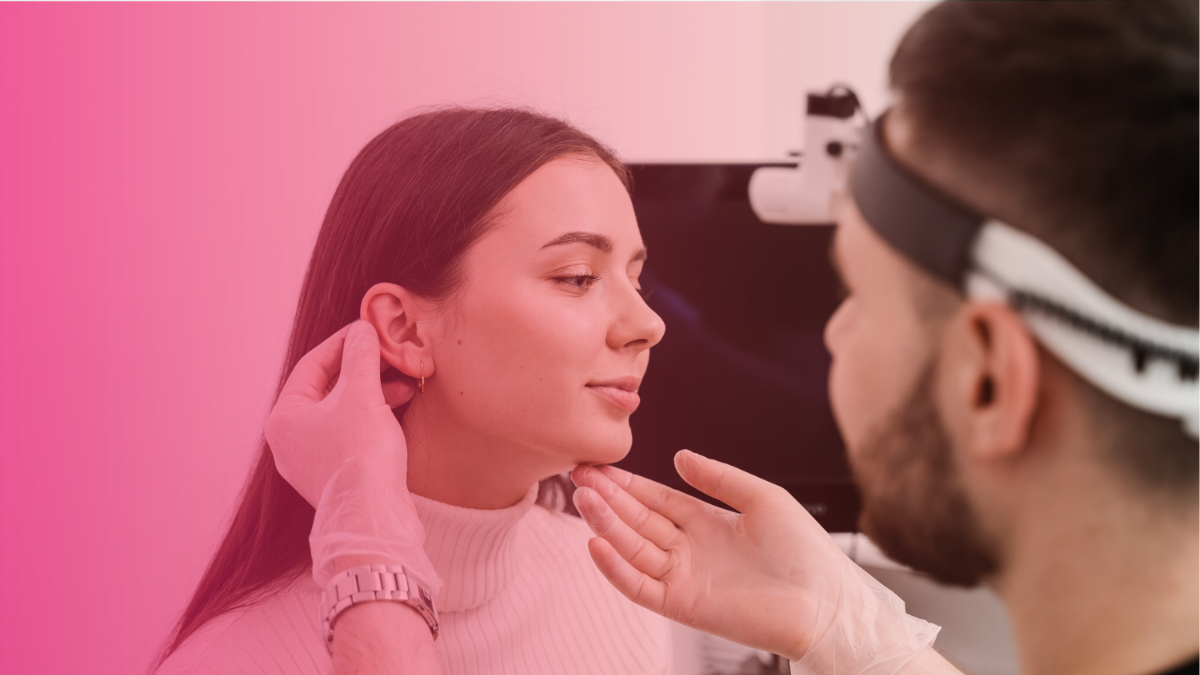
Most surgeons operate on children from about age 5 onward. By that point the outer ear is close to its adult size, the cartilage is sturdy enough to hold a new shape, and a child is usually old enough to say whether they want the operation and to cooperate with the dressings that protect the result. A small number of surgeons report operating as early as 2 to 4 years old without disturbing ear growth, although those reports come from small series with short follow-up, and waiting until 5 or later remains the common position. There is no age at which the window closes.
Otoplasty also works in adults, and anyone who has read that it only works in childhood has been misinformed. Adult cartilage is stiffer and less forgiving, so surgeons more often cut or score the cartilage rather than relying on sutures alone, because a suture-only correction is more likely to relapse against a stiffer spring. Most adults have the operation under local anesthesia, with or without sedation, and return home the same day. Our published estimate is $6,500 to $11,700 all-in for both ears and $3,900 to $6,200 for a single ear, and both figures include the surgeon, the anesthesia and the facility.
What does otoplasty actually change?
Otoplasty reshapes the cartilage of the outer ear and sets the ear closer to the head. Three separate anatomical problems drive the operation, and one patient may have one of them while another has all three. The first is an antihelical fold that never developed properly, so the upper ear has no natural crease and stands away from the scalp. The second is a conchal bowl that has grown too deep or too wide, which pushes the whole ear outward at its base. The third is an earlobe that protrudes on its own. A well-planned operation addresses whichever of those are present, which is why the phrase "pinning back the ears" describes the look of the result rather than the work involved.
Prices vary by location and provider.
Several other procedures carry similar names and are different operations. Newborn ear molding, earlobe repair, ear reduction, correction of a constricted ear, cryptotia and Stahl’s ear are each distinct, and microtia reconstruction belongs to a different field of surgery altogether. The tape-and-glue "non-surgical ear pinning" devices sold online are not a treatment. Perfect symmetry is also not a realistic goal, because ears are normally asymmetric in people who have never had surgery. The surgical aim is a pair of ears nobody looks at twice.
What age is best for otoplasty in a child?
The ear grows early. It reaches roughly 85% of adult size by age 3 to 4, and ear width matures at about 7 in boys and 6 in girls. Ear length keeps growing considerably longer, and it is not mature until 12 to 15 in boys and 12 to 14 in girls. Other sources describe growth as practically complete, above 90%, between ages 5 and 6. The safe statement a parent can rely on is that the ear is close to adult size by school age, which is why that age range became the standard starting point.
Cartilage sturdiness and cooperation matter as much as size. Standard practice holds that the child should be old enough to express the wish for surgery themselves and to tolerate the dressings for weeks afterward, and surgery driven purely by a parent’s preference is considered a poor indication.
The outcome literature is encouraging and genuinely limited. Reviews report that most children and families describe increased self-confidence afterward, that more than half of children report teasing diminished, and that well-being improved in the large majority at 12 months. Those studies are mostly small and descriptive, and a Dutch trial protocol cautions explicitly that surgery will not always resolve the psychosocial problems a child is facing and that children may acquire new ones from the surgery itself. That caveat rarely appears on a clinic page, and a parent deserves to weigh it.
Can a newborn’s ears be corrected without surgery?
For a reader who is pregnant or holding a newborn, this is the most valuable paragraph on the page. Many ear deformities can be corrected with non-surgical molding or splinting during the neonatal period, and the window is short. One review reports clearly better outcomes when molding begins within the first 5 to 7 days of life, with suboptimal results after about 3 weeks, and correction usually achievable when treatment starts before 6 weeks. A recent systematic review supports starting within the first weeks of life, while noting that outcome data across studies still need standardizing.
Molding works because newborn cartilage is temporarily soft and malleable, a state that passes within weeks. A splint or molding device holds the ear in a corrected position while the cartilage firms up around that shape. The practical consequence is that a family who notices a prominent or folded ear in the first days should ask a pediatrician about molding immediately rather than at the one-month visit, because the difference between day 5 and week 4 can be the difference between a splint and an operation years later.
If that window has closed, nothing is lost beyond convenience. The surgical route remains available from about age 5, and the result is good. Molding simply offers a less invasive path for families who learn about it in time, and almost nobody is told.
Does otoplasty work on adults?
Yes. Adults have otoplasty routinely, and the anatomical problems are identical to the ones corrected in childhood. The differences are technical. Adult cartilage has lost the pliability of a child’s, so it pushes back harder against sutures, and a correction held only by stitches carries a greater chance of springing partway back. Surgeons therefore reach more often for techniques that cut or score the cartilage to weaken its natural spring permanently.
Anesthesia usually differs as well. Children have otoplasty under general anesthesia, while adults commonly have it under local anesthesia with or without sedation and return home the same day. An adult who does have general anesthesia should raise the ordinary questions about clot risk with their surgeon, although this is a short operation and that conversation is brief.
The recovery discipline is the same at any age. The headband protocol, the restrictions on contact sports and the ban on sleeping on the treated side apply to a 40-year-old exactly as they apply to a 7-year-old, and compliance is a large part of whether the correction holds.
What does otoplasty cost, and is it priced per ear?
Our estimate is $6,500 to $11,700 all-in for both ears and $3,900 to $6,200 for a single ear. All-in means the figure accounts for the surgeon’s fee, the anesthesia and the facility rather than the surgeon’s fee alone.
That distinction carries unusual weight for this operation, because otoplasty is commonly quoted per ear elsewhere, and a surgeon’s fee quoted per ear with no anesthesia or facility attached can look less than half of a realistic total. A patient comparing a $2,800 quote against a $9,000 quote may be comparing one ear of surgeon time against two ears of everything. Ask every practice three questions in writing: whether the price covers one ear or both, whether anesthesia and facility fees are inside it, and what a revision would cost if the ear relapses.
Prices also shift with geography, with the surgeon’s experience in ear surgery specifically, and with whether the operation happens in an office under local anesthesia or in a surgical facility under general anesthesia. The range above reflects the national picture rather than any single practice, and local figures sit where local cost of care sits.
Which technique holds, and how often do the ears spring back?
Two broad families of technique exist, and a patient can reasonably ask which one a surgeon favors and why. Cartilage-sparing, or suture, techniques reshape the ear with stitches. Mustardé horizontal mattress sutures create the missing antihelical fold, and Furnas conchomastoid sutures pull the conchal bowl back toward the mastoid bone. Those stitches hold against the cartilage’s natural spring for as long as they last, so the characteristic failure modes are relapse and suture problems. Cartilage-cutting or scoring techniques, associated with Chongchet, Stenström and Converse, weaken the spring itself and so remove the force that causes relapse, at the cost of risking sharp edges, visible ridges and over-correction.
Recurrence is the complication patients hear least about and should understand best. A 2024 meta-analysis of cartilage-sparing otoplasty found recurrence or reoperation to be the most commonly reported complication, at 4.27% prevalence, with suture erosion at 2.46% and hematoma or hemorrhage at 1.34%. A German series of 912 otoplasties reported 26% minor complications requiring no further surgery and 11% major complications leading to revision, and among those revisions recurrence of protrusion accounted for 5%, suture granulomas 5% and hematomas 2%. A Brazilian series of 508 cases reported late residual deformity in 11%, suture complications in 6.1%, hypertrophic or keloid scarring in 3.3% and reoperation for recurrence in 3.1%.
An Adelaide retrospective review complicates the usual assumption that cutting is more durable: recurrence requiring revision ran at 10% after a modified Chongchet scoring technique against 2.9% after Mustardé sutures, with suture extrusion appearing as a late complication of the Mustardé group. A 2026 systematic review of 22 mostly retrospective cohorts suggests that hybrids, suture plus cartilage scoring and scoring plus flap, may be associated with lower recurrence and reoperation, and its authors call for high-quality long-term randomized trials before anyone names a superior technique.
The spread in those numbers has a cause worth knowing. A 2009 review of 20 studies found early complications ranging from 0% to 8.4% and cumulative late complications ranging from 0% all the way to 47.3%, and the authors attributed that range to the absence of any uniform method for calculating complication incidence, variable follow-up length and data collection, inconsistent reporting of technique, and publication bias. In plain terms, a practice that follows patients for three months will truthfully report a lower recurrence rate than one that follows them for five years. When a surgeon quotes you a recurrence figure, ask how long they followed those patients.
Our honest summary to publish is this. Relapse or the need for a revision sits in the low single digits in the best pooled data and reaches about 10% in individual series, with late-complication figures as high as 47% in some reports. Planning around roughly one in ten is fair. Partial relapse, where the ear springs back a little rather than fully, is far more common than complete failure, and most of it happens within the first six months.
What can go wrong, and what needs a same-day call?
This is surgery on cartilage, and two complications deserve more attention than the rest.
A hematoma, meaning a collection of blood under the covering of the cartilage, was reported at 1.34% in the pooled data and accounted for 2% of revisions in the German series. It matters because blood trapped against the cartilage threatens the cartilage itself, and left undrained it can produce the permanent thickened deformity sometimes called cauliflower ear. The warning signs appear in the first 24 to 72 hours: increasing pain on one side, a throbbing quality, swelling, a feeling of tightness, or a purple bulge. Contact the surgeon the same day, because it needs draining promptly.
Chondritis, or perichondritis, meaning infection of the cartilage, is the serious one. Cartilage has no blood supply of its own, so antibiotics reach it poorly, and an established infection can destroy the cartilage framework and permanently deform the ear. It typically appears between days 3 and 7. The urgent signs are pain out of proportion to the stage of healing and increasing rather than settling, redness spreading onto the cartilage of the ear rather than sitting on the lobe alone, heat, swelling, fever, or any discharge. This warrants a same-day call rather than a wait-and-see approach, because oral antibiotics may not be enough and treatment can require intravenous antibiotics and a surgical washout.
Several other complications are more common and less frightening. Permanent sutures can work their way out through the skin weeks or months later as a visible bump or a small discharging spot behind the ear, which is not an emergency but needs reviewing and is a frequent reason for a minor second procedure. "Telephone ear" describes over-correction of the middle of the ear relative to the top and bottom, so the upper pole and the lobe stand out and the profile resembles an old telephone handset. The reverse pattern also occurs. Both are shape complications of the surgery and both need a revision to correct, and no reliable incidence figure for either has been published.
The remaining list is worth reading once. Scoring techniques can leave sharp or visible cartilage edges. Asymmetry is possible, as is numbness or hypersensitivity of the ear lasting weeks to months. Hypertrophic or keloid scarring behind the ear appeared in 3.3% of the 508-case series and is more likely in darker skin or with a personal history of keloids, which is a conversation to have before booking rather than after. Stitch abscesses happen. Pressure necrosis from a dressing applied too tightly is preventable and worth one line of its own: pain underneath a dressing is a reason to be seen, not a reason to take a painkiller and wait.
What does recovery really involve?
Compliance with the dressings is a large part of what protects against relapse, so it is worth knowing the commitment before agreeing to the operation. A typical protocol uses a bulky protective dressing for roughly the first week, then a soft elastic headband worn full time for two to four weeks, then the same headband at night only for a further four to six weeks. Some protocols extend nighttime wear to around three months. Protocols vary between surgeons, and the surgeon’s own instructions outrank anything written here.
Alongside the headband come practical restrictions. No contact sports and nothing that could catch or fold the ear for four to six weeks, which for a child means a conversation with a coach and possibly a term away from a sport. No sleeping on the side early in recovery, which children find harder than adults do. No earrings through fresh incisions.
There is a scar. It sits behind the ear and is usually well hidden in the crease, and no honest page should promise a scarless result or describe the operation as incisionless.
Who is not a good candidate for otoplasty?
Children under about 5 are generally asked to wait for sturdier cartilage and near-complete ear growth. A child who does not want the operation is a poor candidate regardless of age, and that judgment belongs to the child as much as to the parent.
An active ear infection rules out surgery until it clears, as does eczema or dermatitis affecting the ear. Nicotine use in any form interferes with healing and is a reason to postpone. Keloid formation is a relative contraindication that calls for frank counseling rather than an automatic refusal. Bleeding disorders and uncontrolled diabetes need managing before an operation on cartilage. Anyone expecting perfect symmetry should reconsider, because that expectation cannot be met by any surgeon.
Will insurance cover otoplasty?
Sometimes, and less often than families hope. Correction of prominent ears in a child is frequently coded as a congenital deformity, and some plans cover it on that basis, particularly when psychosocial impact is documented or when another ear anomaly is being corrected at the same time. Many US plans classify the same operation as cosmetic and exclude it outright. Adult cosmetic otoplasty is essentially never covered, while reconstruction after trauma or cancer usually is.
The practical move is to request a written pre-determination from the plan with the diagnosis code attached, rather than relying on a verbal "it might be covered" from anyone. Written answers survive a billing dispute and verbal ones do not. Policies differ by plan and by state, so no page can tell you what your own plan will do. Our estimate is the cash price, and it is the number to work from until a plan tells you otherwise in writing.
Find providers near you
Compare otoplasty prices from providers near you on our otoplasty page, and see what practices in your area charge before you book a consultation.
Search aesthetic treatments by concern, budget, and location — prices shown before you book.
Find a provider →This article is for general education about aesthetic treatments and pricing. It is not medical advice and is not a substitute for a consultation with a licensed provider. Always confirm current pricing and suitability directly with a provider before booking.
New aesthetic treatment blogs every week, sent straight to your inbox.
Subscribe on Substack →
Comments
Comments are reviewed before they appear. For medical questions, please consult a licensed provider — we cannot give medical advice here.
Loading comments…