What is the biggest risk of Botox?
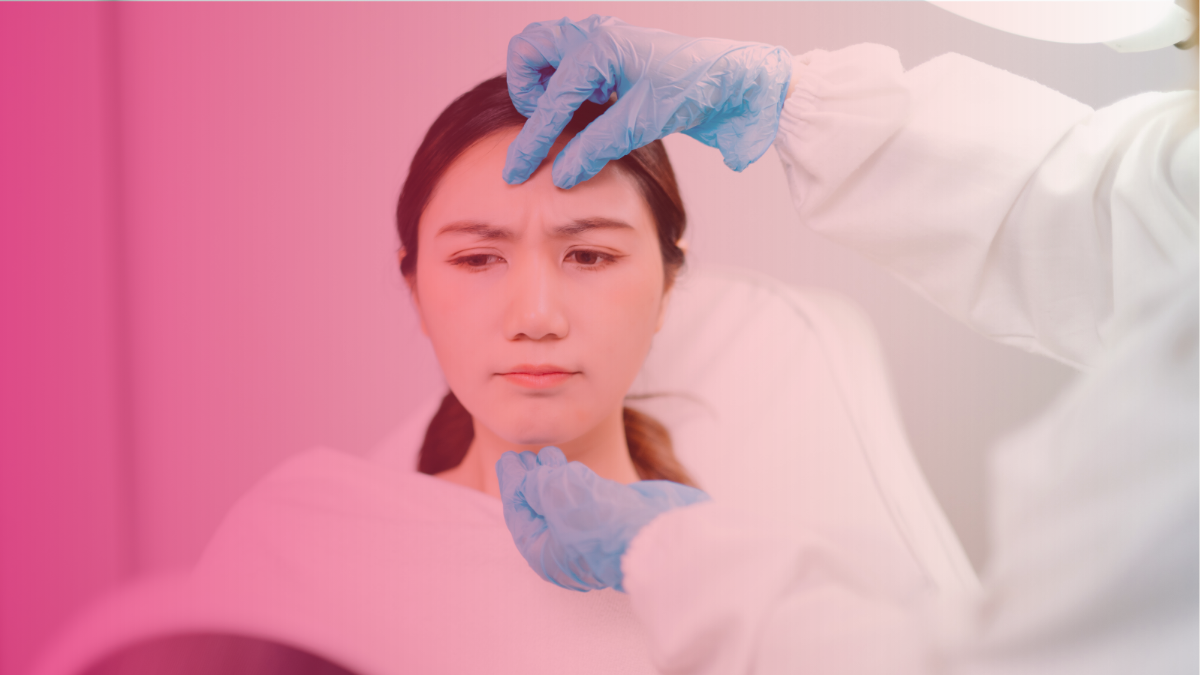
The biggest practical risk of Botox is eyelid or brow ptosis — drooping caused by the neurotoxin affecting muscles it was not intended to reach — and it is almost always the result of incorrect placement or dosing by an inexperienced injector. It is uncommon, it is not permanent, and it resolves as the product wears off over the following weeks. That temporary quality is the single most reassuring fact about Botox risk: nearly every adverse effect fades as the product metabolizes across three to four months. Botox costs $300 to $700 per treatment nationally, or $10 to $15 per unit.
Botox is botulinum toxin type A, one of the most extensively studied treatments in aesthetic medicine, with a long safety record when it is administered correctly by a trained clinician. The risks are real, they are worth understanding in detail, and the majority of them trace back to a single decision you control completely, which is who you allow to inject you. This article covers what actually goes wrong, how often, how it is managed, and what to ask before you book.
What exactly does Botox do?
Botox temporarily blocks the nerve signals that instruct facial muscles to contract. That reduces the appearance of dynamic wrinkles, meaning the lines created by repeated expressions such as squinting, frowning, and raising the brows. It is a neurotoxin rather than a filler, so it does not add volume and it does not resurface skin texture.
Prices vary by location and provider.
Results typically appear within three to seven days, reach their full effect at around two weeks, and last three to four months before muscle function gradually returns to baseline. Common cosmetic treatment areas include the forehead, the lines between the brows known as glabellar lines, and the outer corners of the eyes commonly called crow’s feet.
Understanding that mechanism explains most of the risk. The product works by relaxing muscle, so every complication of consequence comes from relaxing a muscle that should have been left alone. The face is a dense arrangement of small muscles with overlapping functions, and the margin for error is measured in millimeters.
What causes eyelid droop after Botox, and how long does it last?
Eyelid ptosis happens when product reaches the levator palpebrae superioris, the muscle that holds the upper eyelid open. That most often occurs when injections in the glabellar area are placed too low or too deep, or when too much product is used and it diffuses beyond the intended muscle.
Brow ptosis is a related but different problem. It occurs when the frontalis muscle — the only muscle that lifts the brows is over-relaxed, particularly low on the forehead, leaving the brows sitting heavier than before. Patients often describe this as feeling weighed down rather than as an obvious droop, and it can make the upper lids look hooded.
Both resolve on their own as the product wears off, typically over several weeks to a few months rather than the full three to four month cycle, since a partially affected muscle recovers function sooner than a fully treated one. Providers sometimes prescribe prescription eye drops that stimulate a small accessory muscle in the eyelid and can partially lift the lid while you wait. Ask your injector what they can offer if it happens to you, and note that a provider who has a clear answer has almost certainly managed it before.
Is there a more serious risk than ptosis?
Botulinum toxin products carry a boxed warning from the FDA about the possibility of the toxin’s effects spreading beyond the injection site, producing symptoms such as generalized muscle weakness, vision problems, difficulty speaking or swallowing, and breathing difficulty. This is the most serious risk associated with the drug class, and it deserves to be stated plainly rather than buried.
The important context is dose. The reported cases have overwhelmingly involved therapeutic use at doses far higher than cosmetic treatment, most notably in children treated for limb spasticity. The prescribing information notes that these effects have not been confirmed at the doses used for cosmetic treatment of glabellar lines. That does not make the warning irrelevant, and any symptom involving swallowing, breathing, or generalized weakness after an injection is a reason to seek medical attention immediately rather than to wait and see.
Allergic reactions are also possible, as with any injected medication, and anaphylaxis is rare but documented. A practice equipped and trained to manage an acute reaction is not an unreasonable thing to expect.
What are the common side effects of Botox?
The everyday side effects are considerably less dramatic. Bruising at the injection site is the most common, and it is more likely if you take blood thinners, fish oil, or anti-inflammatory medication in the days beforehand. Small raised bumps at each injection point are normal and settle within an hour or so.
Headache in the first day or two is reported by some patients and usually resolves without treatment. Tenderness, mild swelling, and redness at the sites are typical and short-lived.
Asymmetry is the side effect patients notice most. One brow may sit slightly higher than the other, or one side of the forehead may move more than the other, and this often becomes apparent around days five to ten as the product settles unevenly. It is usually straightforward to balance with a small adjustment at a two-week follow-up appointment, which is why many practices build that visit into the price. Confirm whether yours does.
Can a bad Botox result be fixed?
Not reversed, which is the honest answer. There is no antidote that switches the effect off the way hyaluronidase dissolves a hyaluronic acid filler. What can be done is balancing, where a small amount of product is placed in an opposing muscle to even out an asymmetry, and waiting.
That asymmetry is worth understanding: a heavy brow on one side can sometimes be improved by carefully relaxing the muscles that pull it down, and an eyebrow that has lifted too sharply can be softened. These are technique-driven corrections, and they are best performed by an experienced injector rather than by the person who created the problem if you have lost confidence in them.
The larger point is that time solves it. An unsatisfying Botox result is a temporary situation measured in weeks and months, which is a materially different risk profile from a treatment with permanent consequences. That is a genuine argument for starting with Botox rather than something irreversible when you are new to injectables.
What should you do in the first 24 hours?
Most aftercare instructions are simple, and they exist to keep the product where it was placed. Providers commonly ask patients to stay upright for around four hours, to avoid rubbing, massaging, or pressing on the treated areas, and to skip facials and lying face down for the rest of the day. Strenuous exercise, saunas, hot tubs, and alcohol are usually avoided for 24 hours, largely because they increase blood flow and bruising rather than because they move the product.
Some injectors suggest gently exercising the treated muscles in the hours afterward, though the evidence for that is thin and no provider should present it as essential. If you bruise easily, a cold compress helps, and booking at least two weeks before an event you care about leaves room for both the bruising and the settling period. Call your injector rather than waiting if you notice a spreading rash, significant swelling, or any of the neurological symptoms described above.
What happens if you keep having Botox for years?
Patients who continue treatment over years often report needing it slightly less frequently, because muscles that are repeatedly relaxed do less work and gradually weaken, which softens the lines they were creating. That is the reasoning behind treating before deep static lines set in, sometimes marketed as preventative Botox. It is a legitimate argument for a patient whose lines are already visible at rest, and a weak one for someone with no lines at all, which is worth separating when a practice offers it to you in your twenties.
A small number of patients develop resistance over time, where the same dose produces progressively less effect. This is uncommon, and it appears more likely with frequent treatment at higher doses and shorter intervals, which is one practical reason not to book more often than your result actually requires. Switching to a different botulinum toxin product sometimes helps, and that is a conversation for an experienced injector rather than a reason to escalate the dose on your own request.
Who should not have Botox?
Patients with a known allergy to botulinum toxin or to any component of the formulation should not receive it, and neither should anyone with an active skin infection at the intended injection site.
Neuromuscular conditions require real caution. Myasthenia gravis, Lambert-Eaton syndrome, and amyotrophic lateral sclerosis can all make patients more susceptible to the effects of the toxin, including on muscles involved in swallowing and breathing. Disclose any such diagnosis clearly, and expect a careful provider to consult your treating physician or to decline.
Botox has not been studied in pregnancy or breastfeeding, and the standard advice is to postpone. Certain medications, including aminoglycoside antibiotics and some muscle relaxants, can amplify the effect of the toxin, so bring a full medication list to your consultation rather than relying on memory. Patients who have had a previous adverse reaction to any botulinum toxin product should say so before, not after.
Can you get Botox with Sjögren’s syndrome?
Patients with Sjögren’s syndrome can generally receive Botox, but the condition should be disclosed to the injector before treatment. Sjögren’s causes chronic dry eyes and dry mouth because of reduced glandular secretion, and product placed near the orbicularis oculi — the muscle ring that closes the eyelid — can temporarily reduce the completeness of the blink, which may worsen dry eye symptoms in patients who are already susceptible.
For most patients with Sjögren’s, treatment of the forehead or glabellar area carries minimal additional risk. Injections around the eyes warrant more caution, and starting conservatively in that area is a reasonable approach. Consulting your rheumatologist or ophthalmologist beforehand is sensible, particularly if your dry eye is poorly controlled or you use prescription treatment for it.
This is a good example of a broader principle. Autoimmune and neurological conditions rarely rule out Botox outright, but they change the conversation, and they are exactly what a thorough medical history at consultation exists to surface.
Does the injector’s training change your risk?
More than any other variable. Placement, depth, dose, and an understanding of how one patient’s muscle anatomy differs from the textbook are what separate a clean result from a drooping brow, and none of those are properties of the product itself.
Qualified injectors include board-certified dermatologists and plastic surgeons, and also nurse practitioners, physician assistants, and registered nurses working with appropriate training and physician oversight. Scope-of-practice rules vary considerably by state, so the relevant question is not only the credential but the training and volume behind it.
Ask how many Botox treatments the person injecting you performs in a typical month, how long they have been injecting, and who supervises them. Ask to see before and after photographs of their own patients rather than manufacturer marketing images. A skilled injector will answer all of that without hesitation.
Is unusually cheap Botox a red flag?
Pricing well below the typical $10 to $15 per unit deserves scrutiny rather than automatic suspicion. Legitimate reasons exist, including introductory offers, loyalty pricing, and manufacturer rebate programs that practices pass along.
The concerning explanations are worth knowing. Product purchased outside authorized distribution channels may be counterfeit or improperly stored, and neither is visible to you in the treatment room. Over-dilution stretches a vial further and produces a weaker, shorter-lived result, which turns an apparent saving into a repeat appointment. Deeply discounted per-unit pricing is sometimes paired with recommending more units than you need, so the headline rate falls while the invoice does not.
Ask which product is being used, ask to see the vial, and ask whether the practice buys directly from the manufacturer or an authorized distributor. Comparing real prices across several practices is the most reliable way to tell an ordinary discount from an outlier.
What should you ask before booking Botox?
Ask who will be performing the injections and what their training and volume are. Ask which product will be used and confirm it is an FDA-approved neuromodulator obtained through authorized channels. Ask how the price is calculated, whether it is per unit or per area, and what the total will be for your treatment plan.
Ask whether a two-week follow-up is included and whether adjustments at that visit carry an additional fee. Ask what the practice does if you develop a droop or an asymmetry, and how quickly you can be seen. Ask about your specific medical history, and volunteer anything neurological, autoimmune, or medication-related without waiting to be asked.
Finally, ask what they would recommend if Botox were not the right treatment for the lines that bother you. Static lines etched into the skin at rest often need resurfacing or filler rather than a neuromodulator, and an injector who tells you that is protecting your budget as well as your result.
Find providers near you
Knowing the price before you walk in is what makes an unusually low quote easy to spot. See the Botox cost guide for what providers in your area charge per unit and per treatment area, and read the Botox recovery guide to understand what to expect in the hours and days after your appointment.
This article is for general education about aesthetic treatments and pricing. It is not medical advice and is not a substitute for a consultation with a licensed provider. Always confirm current pricing and suitability directly with a provider before booking.
New aesthetic treatment blogs every week, sent straight to your inbox.
Subscribe on Substack →
Comments
Comments are reviewed before they appear. For medical questions, please consult a licensed provider — we cannot give medical advice here.
Loading comments…