10 Things Nobody Tells You About Kybella
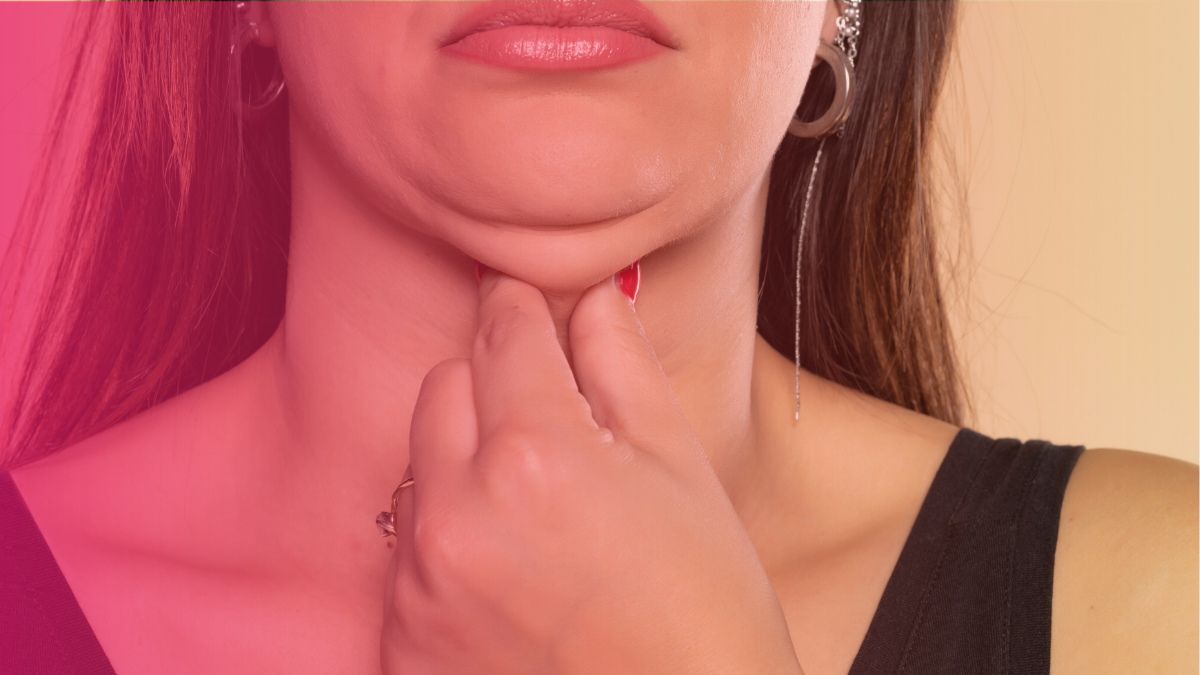
Kybella is marketed as the no-surgery answer to a double chin, and for the right patient it does deliver. The distance between the brochure and what patients actually experience is wide enough that it deserves a straight conversation before you book. The short version of what nobody tells you: the swelling after the first session is dramatic rather than mild, firm lumps under the chin are a normal part of healing that almost no one warns you about, numbness can outlast the swelling by weeks, visible results take six to eight weeks to appear, and the total cost is usually several times the per-vial figure you were quoted.
Kybella is injectable deoxycholic acid, a synthetic version of a bile acid the body already produces to break down dietary fat. The FDA approved it in 2015 for moderate to severe submental fat — the pocket under the chin — and it remains the only injectable approved in the United States for that specific purpose. It destroys fat cells permanently. It does nothing for loose skin, nothing for platysma muscle banding, and nothing for a fuller neck caused by bone structure or a recessed chin. Those distinctions decide whether the treatment is worth your money at all, and they are the ones most likely to be glossed over at a busy consultation. Here are the ten things patients consistently say they wish someone had explained first.
How bad is the swelling after Kybella, really?
Most patients describe waking up the morning after their first session with a chin and neck that have visibly ballooned. Patients frequently reach for the phrase “bullfrog neck,” and it is an accurate description. This is not a complication. Deoxycholic acid destroys the membranes of fat cells, and the body responds with an inflammatory reaction that draws fluid into the treated area. The reaction is the treatment working.
Prices vary by location and provider.
The commonly quoted five to seven days understates it for a lot of people. Swelling usually peaks somewhere in the first 48 hours and then declines steadily, but the residual puffiness under the jaw can linger for two weeks or more, particularly after the first session when there is the most fat to break down. Plan a two-week buffer before a wedding, a photographed event, or a stretch of on-camera meetings rather than the one week you may be quoted.
The burning sensation is the other part patients are unprepared for. Deoxycholic acid begins working on contact, and most people feel a distinct heat under the skin within minutes of the first injections. It typically fades over the following hours to days. It is tolerable for the large majority of patients, and ice and over-the-counter pain relief help, but “mild discomfort” does not quite cover it. Ask your provider what they use for numbing beforehand, because topical anesthetic and ice applied properly make a real difference to the experience.
Why are there hard lumps under my chin after Kybella?
Somewhere around days five to ten, the treated area typically develops firm, marble-like nodules that you can feel when you press under your chin. This is your body walling off and clearing the destroyed fat cells, and it is an expected part of healing rather than a sign that something has gone wrong.
Almost nobody mentions this in advance, which is why a predictable number of patients end up searching “hard lump under chin after Kybella” at midnight, convinced the injection went badly. The nodules generally soften and resolve over several weeks as the debris is cleared through the lymphatic system. What is worth flagging to your provider is a lump that is hot, red, increasingly painful, or accompanied by fever, because that pattern points to infection rather than normal healing and needs to be seen promptly.
How long does the numbness last after Kybella?
Numbness in the chin and jaw is common, and for many patients it outlasts everything else. It frequently persists for three to six weeks after each session, and the numb patch tends to start roughly the size of a silver dollar before shrinking inward over time.
Patients often find this more unsettling than the swelling, because swelling is visible and obviously temporary while numbness simply sits there, feeling like dental anesthetic that never fully wore off. It resolves on its own in the overwhelming majority of cases. Mention it at your follow-up appointment anyway, both so your provider can document it and so they can adjust injection depth or pattern at your next session if the same area is affected repeatedly.
When will you actually see results from Kybella?
Realistically, six to eight weeks after a session, and often longer. The swelling from session one temporarily makes the double chin look larger, not smaller, which is a difficult first impression when you have just paid for the treatment. Underneath that, the breakdown and clearance of fat continues for weeks after the visible swelling resolves.
A common pattern is minimal visible change after the first session followed by a sudden, obvious shift somewhere around week six of the second session. That timeline is normal, and it is also the single biggest source of early panic. This timeline also makes Kybella a poor fit for a deadline. Counting backward from an event, a two-session course realistically needs five to six months of runway before the result has settled enough to photograph well, and a three-session course needs longer. Patients who compress the schedule to make a date usually end up attending it mid-swelling.
Photographs matter here more than mirrors. Ask your provider to take standardized before photographs at the same angle and lighting, because side-by-side images are the only reliable way to judge progress on a change this gradual.
Why is the total cost several times the per-vial price?
Kybella is priced at $600–$900 per vial nationally, and that is almost always the number quoted at a consultation. It is not the number you will pay. Most patients need two to four vials in a single session, and most need two to three sessions spaced at least a month apart. A full course therefore runs somewhere between four and twelve vials in total, which puts the realistic investment between roughly $2,400 and $10,800 depending on how much submental fat is being treated and how your body responds.
What moves the total within that range is fairly predictable. Larger fat pads need more vials per session. Major metros charge more per vial than secondary markets. Practices led by a board-certified dermatologist or plastic surgeon typically price above a nurse-injector-led medical spa. Many practices discount when you commit to a multi-session package upfront, which is worth asking about, though a package is only a saving if you would genuinely have completed all the sessions anyway.
Financing through third-party lenders is widely offered at this price point, and it is worth reading carefully rather than signing at the front desk. A deferred-interest plan that becomes expensive if you miss the payoff window is a very different product from a fixed-rate loan, and the practice is paid either way. Comparing written quotes from two or three practices costs you nothing and frequently changes the number by thousands of dollars, because per-vial pricing varies far more between practices in the same city than most patients assume.
Ask for a written estimate of total vials across the full plan before you pay for anything. A provider who cannot give you a range for the whole course has not assessed you carefully enough to be quoting you at all.
What is the nerve risk that rarely comes up at consultation?
The marginal mandibular nerve runs along the jawline directly above the treatment zone, and it controls the muscles that pull the lower lip down. If product is placed too high or too superficially, that nerve can be temporarily affected, producing an uneven smile or a lower lip that does not move symmetrically.
In the manufacturer’s clinical trial data, this was reported as temporary, with a median duration of around 44 days, though the longest reported cases took many months to fully resolve. It is uncommon, it is listed in the consent form you will sign, and it should also be explained to you out loud. Injection technique is the main variable you can influence, and you influence it by choosing who holds the syringe. Ask directly how many Kybella courses the injector has personally completed, not how many the practice has performed.
Swallowing difficulty and injection-site ulceration are also documented, less commonly. Neither should be presented to you as a formality. Difficulty swallowing or breathing after an injection is a reason to seek care the same day rather than to wait for your follow-up, and an injection site that breaks down into an open sore, or that turns dusky and hard rather than simply firm, needs to be seen promptly as well.
Can Kybella tighten loose skin under the chin?
No. Kybella destroys fat and does nothing to skin quality or elasticity. In patients who already have meaningful skin laxity — more common after 40, and after significant weight loss at any age — removing the underlying fat can leave the skin above it looking looser rather than tighter.
This is one of the most common sources of dissatisfaction with the treatment and also one of the most preventable. A careful provider assesses skin elasticity before recommending Kybella at all, and where laxity is the dominant issue they will point you toward a skin-tightening approach such as Ultherapy or a radiofrequency device instead, or toward a combined plan. If nobody examines and comments on your skin quality during the consultation, treat that as a warning sign rather than a time saving.
Is your double chin actually fat?
Submental fullness has several possible causes, and only one of them responds to Kybella. Fat under the chin is the treatable one. Loose skin is not. Vertical banding of the platysma muscle is not. A recessed or small chin that changes the profile of the jawline is not, and neither is an enlarged submandibular gland.
Genetics play a large role, which is why slim patients sometimes carry submental fullness that will not budge with weight loss. Pinching the area gently is a crude home test, but it is not a substitute for an in-person assessment, and providers do not always screen for the distinction as carefully as they should. Discovering you were the wrong candidate after spending several thousand dollars is expensive and demoralizing.
The obvious alternatives are worth understanding before you commit. Submental liposuction removes fat in a single session with a faster path to the final result, at the cost of a minor surgical procedure. Cryolipolysis with a small submental applicator is another non-surgical fat-reduction route with a different side-effect profile and no needles. A provider who only offers one of these is not well placed to tell you which is right for your anatomy.
Compare the options on total cost, total downtime, and number of visits rather than on the headline price of a single session. A single surgical procedure with a couple of weeks of recovery and a three-session injectable course with visible swelling after each one are closer in real-world disruption than the marketing around either suggests. Anesthesia, facility fees, and compression garments belong in the surgical column of that comparison, and a genuine assessment of whether you would repeatedly take time away from work belongs in the injectable one.
Are Kybella results permanent?
Fat cells destroyed by deoxycholic acid do not regenerate, so the cells that are eliminated are gone for good. That is the part that is genuinely permanent, and it is a real advantage of the treatment.
The asterisk is that the fat cells remaining in the area can still enlarge if you gain a significant amount of weight, which partially reverses the visible improvement. A few holiday pounds will not undo the result. A substantial change in body weight can. Aging skin will also continue to change independently of the fat, so the area at 55 will not look identical to the area at 45 even with a perfect outcome. Both points are reasonable, and neither tends to come up before you book.
What should you ask before booking Kybella?
A short list makes the consultation far more useful. Ask whether your submental fullness is primarily fat, skin, or muscle, and ask the provider to explain how they assessed it. Ask how many vials per session and how many sessions total they expect, and ask for the resulting cost range in writing. Ask who will perform the injections and how much personal experience they have with this specific product. Ask what their protocol is if you develop an uneven smile or a lump that does not settle, and how quickly they can see you.
Then ask what they would recommend if you were not a candidate for Kybella. A provider who has a considered answer to that question is the one worth booking with.
Find providers near you
Comparing real prices before you commit is the difference between a $2,400 plan and a $10,800 one you did not see coming. Browse Kybella providers and pricing to see what practices near you charge per vial, and read the Kybella recovery guide for a day-by-day view of what the healing timeline actually looks like.
Compare Kybella providers and estimated prices near you.
Kybella cost guide →This article is for general education about aesthetic treatments and pricing. It is not medical advice and is not a substitute for a consultation with a licensed provider. Always confirm current pricing and suitability directly with a provider before booking.
New aesthetic treatment blogs every week, sent straight to your inbox.
Subscribe on Substack →
Comments
Comments are reviewed before they appear. For medical questions, please consult a licensed provider — we cannot give medical advice here.
Loading comments…