How Much Does Kybella Cost, and Is It the Right Double Chin Treatment for You?
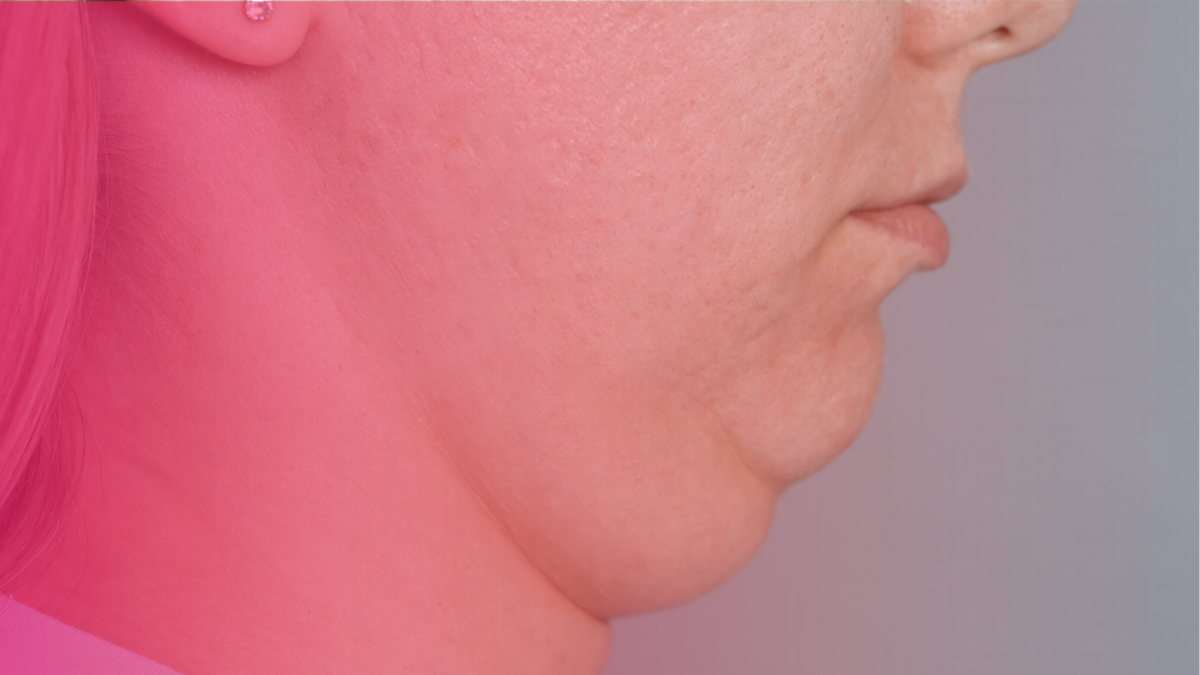
Kybella is priced by the vial. Get Clear Beauty estimates it at $600 to $900 per vial nationally, and $660 to $1,022 per vial in Atlanta. Sessions commonly use two or more vials, so one session usually starts around $1,320 to $2,044 at Atlanta rates, and most people need more than one session.
The injector we spoke with charges considerably less than that. Her price is $800 for a full two-vial session, which works out to $400 a vial, and her typical patient spends $1,600 to $2,400 in total. Her pricing is broken down further down.
That injector is Jessica Radcliffe, a nurse practitioner and the owner of Vibe Aesthetics in Marietta, Georgia, just outside Atlanta. She started as a NICU nurse, became a nurse practitioner, and opened her own solo practice a little over a year ago so she could take time with patients rather than work to someone else’s schedule. She joined us on the Get Clear Beauty Podcast to talk about treating a double chin, and she has had both of the treatments discussed here done on herself. You can find her on Instagram and Facebook.
One note on timing, because it matters. This episode was recorded on August 6, 2026. On September 15, 2026, about five weeks later, the FDA published a safety communication about Kybella and approved new label warnings. Nothing Jessica said was wrong when she said it. The warnings do not change how Kybella is used under the chin, which is what most of this article is about. They do change the answer about using Kybella elsewhere on the body, which comes up in the episode, so we have given the FDA’s current position its own section below.
What is Kybella, and what does it do to the fat under your chin?
Kybella is injectable deoxycholic acid. Deoxycholic acid occurs naturally in your body, where it helps break down fat from food. Injected into the pocket under the chin, it breaks open the membranes of fat cells there, and your body clears the debris over the following weeks.
Prices vary by location and provider.
It was approved in 2015 and is the only injectable approved by the FDA for a double chin, which is why it is the one most people have heard of. Liposuction is much older, so Kybella is the longest-standing injectable rather than the longest-standing option.
Its approval is narrow and worth stating precisely, because it governs a lot of what follows. The label covers improving the appearance of moderate to severe fullness under the chin, called submental fat, in adults. Mild fullness was excluded from the trials. It is not approved for fat anywhere else on the body.
Are the fat cells gone for good? Mostly, though the usual explanation is not quite right. Jessica’s version was that a fat cell, once made, is there for life and can only shrink. What research actually shows is that the number of fat cells stays roughly steady through adulthood while individual cells are replaced over time, at something like 8% a year. The practical answer is the same, and it is the one that matters: the cells destroyed in the treated area are gone, but the cells left behind can still enlarge. If you gain weight, the fullness can come back. Kybella is not protection against weight gain, which is why Jessica, like every provider we have had on this show, says to be at your goal weight and planning to stay there before you pay for anything.
There is no antidote. This is worth knowing if you are comparing injectables. Hyaluronic acid filler can be dissolved if you dislike it. Deoxycholic acid cannot be reversed. Once it is in, the management of a bad outcome is wound care and time, not an undo button.
Is it definitely fat, or something else?
This is the question almost no article about double chins asks, and the Kybella label requires providers to consider it before treating.
Fullness under the chin is not always fat. The label specifically tells providers to rule out other causes, naming an enlarged thyroid and enlarged lymph nodes in the neck. A lump or fullness under the jaw can also be an enlarged salivary gland, a cyst or a lipoma. A swollen lymph node can be a sign of something that needs investigating rather than dissolving.
Two more causes are structural rather than fatty, and no fat treatment improves either. A recessed or small chin reads as a double chin from the side, and the answer there is a chin implant or chin filler. A drooping submandibular gland or a low-sitting hyoid bone produces a full neck shape that will look the same after the fat is gone.
If what you have is a distinct lump rather than a soft general fullness, see a doctor about it before you see an injector.
Who is a good candidate, and who is not?
Jessica is deliberately selective, and this is the most useful part of the episode for anyone deciding whether to book.
Kybella works on a defined, pinchable pocket of fat. It does not work on a large, full neck. Her words were that if you come in with a neck full of fat, it is simply not going to work for you. She also separates fat from loose skin, which is a different problem with different treatments. If you can pinch a decent amount and the tissue underneath feels thicker, you probably have a fat pocket. If the skin is simply loose and hanging, dissolving fat will not help and can make the loose skin more obvious. She offers free consultations for exactly this assessment, and she tends to use Kybella more for younger patients, who are less likely to have significant laxity.
One nuance on her framing: the approved patient has moderate to severe fullness, not a tiny amount. If what bothers you is slight, you may be a worse candidate than you think, in the other direction.
Kybella should be avoided or postponed if any of these apply, and tell your provider about all of them:
- An infection in the area. This is the one outright contraindication on the label.
- Any current or past difficulty swallowing. The label says to avoid Kybella in these patients.
- A bleeding disorder, or treatment with a blood thinner or antiplatelet medication. Use caution, and never change a prescribed medication without your prescribing doctor’s approval.
- Significant skin laxity or prominent neck bands. Removing fat can make the result look worse.
- Previous surgery or treatment under the chin, which changes the anatomy and leaves scar tissue.
- Pregnancy or breastfeeding. There is no adequate human data for either.
- Being under 18. The label covers adults only.
How many vials and sessions will you need?
Jessica uses two vials in a single session as her standard. She will occasionally use one for a patient with very little fat who wants minimal change, but she was direct that two vials is what produces a result worth paying for. If a second session is needed she spaces it two to three months apart and uses another two vials. In her practice, most patients need one to two sessions.
It is worth setting that against the trial data, because the gap is wide and it is the difference between a $1,600 plan and a much larger one. In the studies behind the approval, the average first treatment used about 6.4 mL, which is more than three vials, and 59% of patients went on to receive all six permitted treatments. The label allows up to six treatments, spaced no less than a month apart, with a ceiling of 10 mL in any one session. A vial holds 2 mL, so a two-vial session is 4 mL, comfortably inside that limit.
Her two-to-three-month spacing is more conservative than the label’s one-month minimum, which is sensible, because the swelling takes weeks to settle and you cannot judge a result until it has.
How much change should you expect? In the trials, around 70% and 66% of patients improved by at least one grade on a five-point scale, while only 13% and 19% improved by two grades or more. A noticeable improvement is a realistic goal. A transformation usually is not.
How much does Kybella cost?
Get Clear Beauty estimates Kybella at $600 to $900 per vial nationally and $660 to $1,022 per vial in Atlanta. At two vials, that is $1,200 to $1,800 per session nationally and $1,320 to $2,044 in Atlanta.
Jessica prices by the treatment rather than the vial. She charges $800 per session including both vials, which is $400 a vial, below the bottom of our national estimate. Her typical patient total of $1,600 to $2,400 is two to three sessions at that price. Two to three sessions at the Atlanta rates we estimate would be $2,640 to $6,132.
A per-vial price is not a treatment price, and this is where quotes get confusing. Settle all of this before you agree to anything:
- Is the price per vial or per session, and how many vials does a session include?
- How many sessions do you expect, and what is the total if I need more?
- What happens to the price if I need a third or fourth session?
- Is a follow-up review included?
What does the appointment and the recovery feel like?
Expect numbing. The label suggests ice or cold packs, topical numbing and injected local anesthetic such as lidocaine, and most providers use a combination. There is a burn on injection that lasts a minute or two and then stops. Jessica recommends ice afterward and says Tylenol is fine if you want something. Acetaminophen rather than ibuprofen is the right choice here, since anti-inflammatories thin the blood and bruising is already likely.
Then comes the swelling, which is the part people worry about. Jessica’s experience, on herself and across her patients, is that it is far more noticeable to you than to anyone else, and that someone meeting you would most likely see nothing beyond slight fullness. How much you swell varies, and it takes several weeks to settle, so do not judge your result early and do not book this near an event.
Bruising is not a possibility, it is the norm. The label reports bruising or hematoma in 72% of patients in the trials.
Jessica described the treated area feeling liquidy or, in her word, sloshy, while the cells break down, and that is a real and expected sensation. One qualifier she did not add: a soft, fluid-feeling area can also be a collecting bruise or an infection rather than fat dissolving. If the area becomes increasingly swollen, tense, hot, red or painful rather than settling, that is worth a call to your provider rather than waiting it out.
What are the risks, and what did the FDA change in September?
The everyday risks of any injection apply: bleeding, bruising, swelling and infection. Beyond those there are specific labeled risks, and the picture changed last month.
On September 15, 2026, the FDA published a safety communication on Kybella and approved new label warnings. Reviewing adverse event reports and published literature, the agency found an association between deoxycholic acid injections and injection site nodules and masses that may not resolve on their own and may require medical treatment. A nodule is 3 cm or smaller and a mass is larger. The FDA identified 117 cases of unresolved nodules or masses which, at the time they were reported, had been present for a mean of 143 days, about five months. These have occurred with correct, approved use under the chin as well as with off-label use. In the original trials nodules appeared in roughly 13% of treated patients against 3% on placebo, and most resolved. The new warning is about the ones that do not. The label now tells providers to stop treatment if a patient develops an ulceration, tissue death, a nodule, a mass or an infection at the injection site.
The other labeled risks:
- Nerve injury causing an uneven smile or facial weakness. The marginal mandibular nerve runs through the jaw. In the trials this affected 4% of treated patients against under 1% on placebo. Every case resolved without further treatment, but the range ran from 1 day to 298 days, with a median of 44. Jessica said she had never seen it last beyond a few months, which matches the typical case, and the label shows it can run close to ten months. This motor effect is a different thing from ordinary numbness, which is very common and settles.
- Difficulty swallowing. This affected 2% of treated patients against under 1% on placebo, resolving on its own in about three days typically, though one case took 81.
- Ulceration and tissue death. Jessica named necrosis as the serious risk of a badly placed injection and she is right about the mechanism. The label states that injecting too superficially, into the skin rather than the fat beneath, can cause ulceration and necrosis. That is a depth error, which is why her point about training is not a throwaway line.
- Hair loss at the injection site. Labeled, uncommon, and a reason to pause further treatments until it resolves.
- Serious infection, including cellulitis and abscesses needing intravenous antibiotics and surgical drainage.
- Nearby structures. The label instructs providers not to inject into or within 1 to 1.5 cm of the salivary glands, lymph nodes or muscles.
Contact your provider promptly, and seek urgent care if you cannot reach them, if you develop an uneven smile or facial weakness, any trouble swallowing, a lump that is not settling, skin that breaks down, or signs of infection such as spreading redness, heat, fever or severe pain. The FDA’s own instruction is to seek medical attention for any adverse event rather than waiting to see.
Should Kybella be used anywhere other than under the chin?
This is the one place where the episode and the FDA’s current position do not line up, and the gap is timing rather than judgment.
Recording in August, Jessica said Kybella can be injected anywhere there is fat under the skin, and described having used it on small lower abdominal pockets and on the bra line. Danielle was enthusiastic about it for two small pockets on her hips, as an alternative to surgery for something too minor to justify an operation.
The FDA’s September 15 communication recommends against this, and the label now carries a dedicated warning about it. Kybella is not approved for fat outside the area under the chin, and the agency states that when it is given elsewhere, neuromuscular and other serious adverse events may occur. Reported reactions from use outside the submental area include blurred or reduced vision when it has been used near the eyes, involuntary eye contractions, and facial weakness or altered sensation. The nodules and masses finding applies to these sites too.
Off-label prescribing is legal and routine in medicine, and a provider may still offer this. What has changed is that there is now a specific, current FDA statement advising against it. We are not going to publish dosing guidance for body areas three weeks after that communication. If someone proposes Kybella for your abdomen, flanks, hips or bra line, ask how they have accounted for the September 2026 warning before you book. For body fat, the better-grounded options are the ones Jessica herself named, including liposuction.
What about the cheap fat dissolving injections you see online?
If you are shopping on price, this is the warning that matters most.
The FDA has warned consumers against unapproved injectable products sold for fat dissolving under names including Lemon Bottle, Aqualyx, Lipo Lab, Kabelline and Lipodissolve. Reported harms include permanent scarring, serious infections, skin deformities, cysts and painful lumps. These are not cheaper versions of Kybella. They are not approved for this at all.
Kybella is the FDA-approved deoxycholic acid product for submental fat. A generic was approved in 2021, but Kybella is the one currently listed as marketed, so a bargain-priced "generic Kybella" deserves hard questions.
If a quoted price is far below the ranges in this article, ask what is in the syringe, ask to see the vial, and ask who is injecting it.
What is Quantum RF, and when is surgery the better answer?
Quantum RF is a newer InMode handpiece, used on the company’s Ignite RF platform and on the market only a couple of years. Jessica calls it her little magic wand and it has become her preference for patients with more fat than Kybella handles well.
The procedure sits between an injection and surgery. She numbs the whole area with numbing fluid, makes a very small incision, and passes a heated probe under the skin, which heats the tissue so that it contracts and tightens. The incisions are tiny, usually need no stitches, and sit under the chin or in the hairline where they are not visible. The appointment runs about an hour to an hour and a half. Her recovery description was that it is longer and shorter in a strange way: the tissue takes longer to heal than after an injection, but you avoid Kybella’s weeks of swelling. Final results from collagen remodeling typically take three to six months.
Two things to be straight about, because they are not in the marketing. First, the system is cleared by the FDA for contracting soft tissue, and fat reduction is not in its cleared use. InMode’s own page for the handpiece claims soft tissue contraction and does not claim fat reduction either, so describing it as melting or killing fat goes further than both the clearance and the manufacturer. Second, there are no published clinical studies of this handpiece, under the chin or anywhere, so the single-session expectation comes from the manufacturer and from individual practices rather than from trial evidence. Jessica is describing what she sees in her own patients, which is worth something, but it is not the same kind of evidence as the Kybella numbers above.
It is also not the same technology as Morpheus8, which is often implied. Morpheus8 delivers radiofrequency through microneedles from outside the skin. Quantum RF puts a probe underneath it. Same company and same energy, different procedure.
Because a heated probe goes under the skin, the risks are a step up from an injection: swelling and infection, which is why it is done under sterile conditions, thermal burn or skin injury, nerve injury including the same jaw nerve Kybella can affect, contour irregularity or dimpling from uneven treatment, which is not easily reversed, a seroma or bruise collecting, prolonged firmness while the tissue remodels, darkening at the entry point, and a keloid or lump, with keloid risk higher in deeper skin tones.
Price: we estimate Quantum RF at $1,800 to $2,700 per session nationally and $1,980 to $2,970 in Atlanta. Jessica charges about $2,000 for the under-chin and jawline area, at the bottom of our Atlanta range. Since it is usually one session against Kybella’s two or three, the totals land close together, which is why she leaves the choice to patients on how invasive a treatment they want.
She also mentions adding a small amount of Botox into the neck for younger patients to relax the muscle that pulls downward. That use is now approved rather than off-label: the FDA approved Botox Cosmetic for moderate to severe platysma bands in October 2024.
When surgery is the better answer. Jessica was willing to talk patients out of what she sells, which is the behavior to look for. If you have a large amount of fat and want a large amount removed, chin liposuction is the better operation and nothing injected or inserted will match it. If your real problem is loose neck skin, a neck lift or facelift is the answer, and treating the fat will not fix the skin. Where these treatments earn their place is for people who do not want surgery, cannot have it, or do not want to pay surgical prices, and who have the kind of fat pocket they are actually good at.
Her closing advice was the thing she most wished patients knew. Come in with the complaint rather than the product. People arrive having decided from the internet that they need one specific treatment, and it is often not the one that will help them. Danielle’s own example was wanting a facelift at forty, being told no twice, and ending up happy with Sculptra instead.
Find providers near you
You can compare Kybella prices and find providers near you on our Kybella price guide. If you are in the Atlanta area, Jessica Radcliffe sees patients at Vibe Aesthetics in Marietta, and you can book through the Vibe Aesthetics website.
Wherever you book, settle four things first: whether the fullness under your chin is actually fat, whether the price is per vial or per session and how many vials you are getting, how many sessions you are realistically likely to need and what the full total comes to, and what your provider does if a lump, an uneven smile or trouble swallowing turns up afterward.
Compare Kybella providers and estimated prices near you.
Kybella cost guide →This article is for general education about aesthetic treatments and pricing. It is not medical advice and is not a substitute for a consultation with a licensed provider. Always confirm current pricing and suitability directly with a provider before booking.
New aesthetic treatment blogs every week, sent straight to your inbox.
Subscribe on Substack →
Comments
Comments are reviewed before they appear. For medical questions, please consult a licensed provider — we cannot give medical advice here.
Loading comments…