How Much Does Microneedling With PRP Cost, and What Are You Actually Paying For?
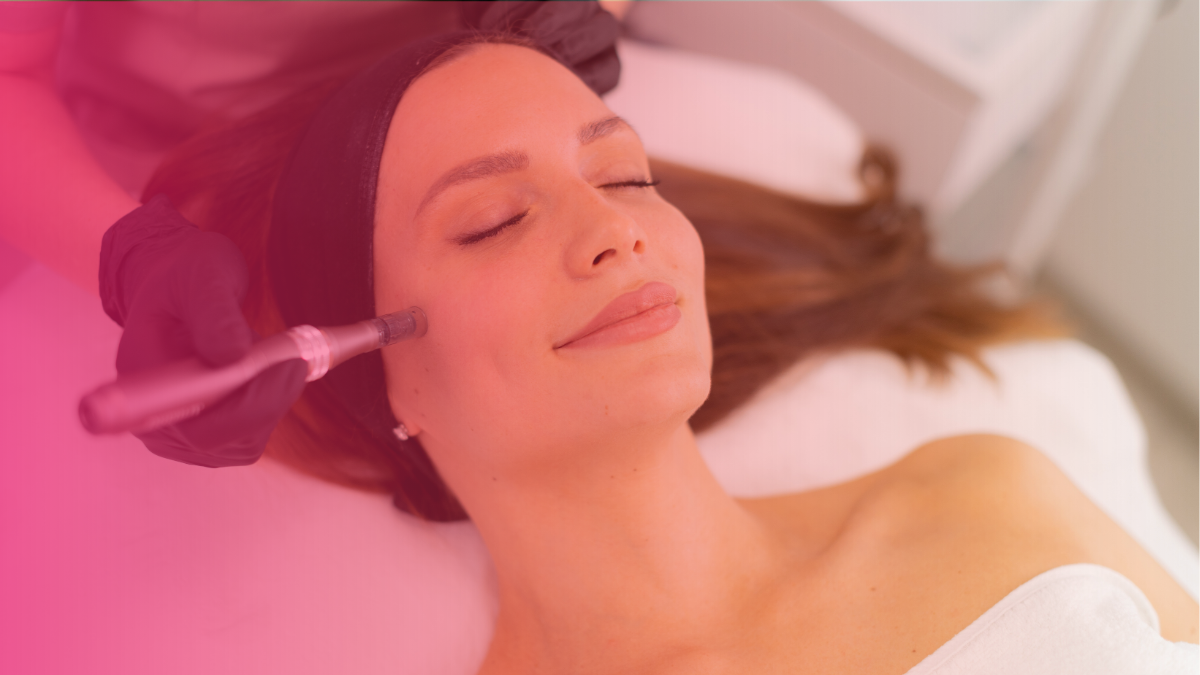
Microneedling with PRP costs about $500 to $900 per session in most of the country. In Memphis, where nurse practitioner Renee Pinlac runs De La Belle Wellness & Spa, the range is closer to $450 to $810. At her own clinic, microneedling with topical PRP runs $750 to $950 depending on the time of year and whatever promotion she has going, and her website currently lists it at $775. When the PRP is injected under the skin rather than applied on top, the price is $1,150, because that is a different procedure.
The number is the easy part. The harder question is why one clinic charges $450 and another charges $1,150 for something that sounds like the same appointment, and how you tell a careful practice from a careless one. Renee joined the Get Clear Beauty Podcast to walk through what happens in the room and what she thinks patients should ask before they book. She has been a nurse practitioner for more than twenty three years, and spent seventeen and a half of them at St. Jude Children’s Research Hospital before opening her own practice. She credits St. Jude with teaching her to treat the whole person rather than a symptom, and says her research background made her particular about what she puts on people. Some of what follows is hers. The sections on safety, downtime and evidence are ours, because the episode did not cover them and you need them before you book.
What is PRP, and what happens during the appointment?
Renee describes PRP as your body’s repair kit. When you skin your knee, platelets rush to the injury and start repairing it, and this treatment puts that mechanism to work on your face. Platelets carry growth factors. Because the plasma is made from your own blood, it is autologous, so there is no risk of rejection or allergic reaction to the material itself.
Prices vary by location and provider.
Her analogy for how the two halves work together is the clearest one we have heard. Microneedling is like tilling the garden and making the rows. The PRP is the premium seed you plant in them.
You will also see PRF advertised, and patients rarely know the difference. PRF is prepared without an anticoagulant and at a slower spin, which produces a different product with an even thinner evidence base. The two are not interchangeable, and a claim made about one does not transfer to the other.
The appointment starts with a medical consultation rather than a needle. Renee wants to know whether you are a candidate, what you are expecting, and how many treatments you are likely to need. Numbing cream goes on next, and it should be applied in the office by your provider rather than sent home with you.
While you are numbing, your blood is drawn, usually one or two small tubes, about what is taken for a routine blood test. Renee’s kit uses an eleven milliliter tube for the face. Eat and hydrate beforehand, tell them if you have ever felt faint at a blood draw, and mention it if you are anemic, because a series of treatments means repeat draws.
The blood is spun in a centrifuge, which separates the platelet-rich plasma from the platelet-poor plasma. The microneedling device then creates channels in the skin. From there, either the PRP is laid on top and the device is run over it again on a lighter setting to push it in, or the plasma is injected under the skin. Renee’s clinic has been injecting it for almost ten years, particularly under the eyes and directly into areas of hyperpigmentation. Plan on an hour to an hour and a half, depending on whether you are having face only or face and neck.
What does microneedling with PRP treat, and what can it not do?
Renee uses it for skin texture, fine lines, acne scarring, sun damage and hyperpigmentation. The strongest evidence sits with atrophic acne scars and skin texture, which matches what she treats most.
The under-eye claim needs care, because it is oversold everywhere. In that area this treatment works on the quality of the skin, meaning crepiness, fine texture and tone. It will not flatten a tear trough. Under-eye hollowing is structural, coming from fat pad position and bone support, and it is addressed with filler, fat transfer or surgery. PRP adds no volume. A provider who tells you it will fill a hollow is overselling.
The same honesty applies elsewhere. This does not replace lost volume, does not treat significant sagging, does not do what a neurotoxin does for movement-related lines, and does not treat active acne. Results are not permanent, and most people maintain with periodic sessions. The better acne scar studies report something in the range of twenty to fifty percent improvement in scar measures across a series, which means a reader expecting her scars to disappear will be disappointed by a result that was genuinely good.
You should also know where this sits with regulators. PRP is not approved by the FDA for aesthetic use. The centrifuges and kits are regulated as devices and most carry 510(k) clearance, but that clearance confirms a device can separate blood components safely and is not an endorsement of any cosmetic result. Every aesthetic use of PRP is off-label, which is legal, common, and not in itself a red flag, though you deserve to know that nobody approved the marketing claims. The published research is small in scale, and preparation methods differ so much between clinics that results are hard to compare. The evidence is weakest for melasma and for anything involving volume.
Why does injected PRP cost more than topical PRP?
At De La Belle, topical PRP is $750 to $950 and injected PRP is $1,150. The gap is not a markup on the same service. Injecting plasma under the skin is a different procedure with different technique demands, and it is what allows a provider to target a specific area rather than treating the whole surface.
The rest of the price covers things that do not look like line items. Someone drew your blood into a specific collection tube. A centrifuge spun it. A medical-grade device with a single-use cartridge did the needling. All of that equipment exists for one patient and is then discarded. Renee puts it plainly: you are not paying for a tube of blood, you are paying for the expertise of that sterility practice.
Price differences between clinics are real and worth asking about. A lower price is not automatically a worse treatment and a higher price is not automatically a better one. What matters is whether you can find out what the number covers.
How can you tell whether a clinic is running a safe sterility practice?
Start with the device. Renee is direct that a medical-grade device matters, and that store-bought needling devices bought from unknown websites and used at home can create more damage than the fine lines and texture the person bought them to fix. A properly made channel reads to your body as a controlled injury signal, so healing is sent to the area. An actual injury is only an injury.
Then there is the equipment handling, and there is now a documented reason to care about it. In April 2024 the CDC published an investigation in its Morbidity and Mortality Weekly Report into an unlicensed New Mexico spa offering PRP microneedling facials. The investigation, covering 2018 to 2023, identified five HIV cases linked to the business: four clients who had the procedure and one partner of a client who had never been there. These are understood to be the first documented HIV transmissions linked to this kind of cosmetic procedure. Inspectors found single-use equipment being wiped with alcohol and reused, unlabeled tubes of blood on a kitchen counter, blood stored in a kitchen refrigerator with food, no autoclave on the premises, and unwrapped syringes in drawers and in ordinary trash. Nearly two hundred former clients were traced and tested.
A properly run clinic makes this risk very low. That case was an unlicensed operator ignoring basic practice, and the reason to know about it is so you can tell the difference rather than avoid a reasonable treatment. Here is what that looks like in the room. The clinician is licensed, and you may ask their name and license type. Your blood is drawn, spun and returned within the same visit without leaving your sight. Your tube is labeled with your name in front of you. The needle cartridge is single-patient and comes out of a sealed package opened in front of you, and a reputable clinic will not be offended by the question. Sharps go into a sharps container. None of this happens near food or in a domestic setting.
Renee’s own line belongs here. If the price sounds too good to be true, it usually is. At her clinic everything is patient-specific and single use: the collection tubes, the needles, the handling of the centrifuge, the needling device, the needle cartridge and the sleeve that covers it. In her words, it is not just about using gloves.
She also gave three questions to ask, and they are worth writing down. Is this a medical-grade device? What type of tube do you collect my blood in? Can you show me before and after photographs of treatments you have performed yourself? Then judge the answer the way you would judge any provider. If it is solid and you trust the person giving it, go ahead. If it sounds vague, that tells you something too.
What should you tell your provider about your medications and health history?
This treatment depends on your blood clotting normally and your skin healing normally, so your provider needs your full medication list and medical history at the consultation, before you book rather than on the day. Treat this as your checklist.
The most important sentence in this post is this one: never stop a prescribed blood thinner for a cosmetic procedure. Anticoagulants prescribed for atrial fibrillation, a clot history, a stent or a valve are preventing something far more serious than a bruise. Tell your provider you take one, and any decision about pausing it belongs to the doctor who prescribed it, not to the clinic and not to you.
Two separate issues are commonly confused here. One is bleeding, meaning more pinpoint bleeding during the treatment and more bruising afterward. The other is that antiplatelet medication may work against the treatment’s own mechanism, since growth factor release depends on platelets activating. The clinical evidence on both points is genuinely unsettled and there are no clear guidelines, which is another reason this is a conversation with your provider rather than something to decide from an article.
The advice that circulates in aesthetics about holding things for a week beforehand applies to elective over-the-counter items, meaning aspirin taken by choice, NSAIDs, fish oil and vitamin E, and only where your provider advises it.
Reasons to postpone or reconsider include an active infection near the treatment area; an active cold sore, and while a history of cold sores is not an exclusion it does mean preventive antiviral medication, because needling can reactivate and spread the virus; an active inflammatory acne flare or open lesions, since this treats acne scarring rather than active acne; a personal or family history of keloids or raised scarring; any undiagnosed lesion, which needs a diagnosis first; pregnancy and breastfeeding, since this is elective and unstudied there; platelet and clotting disorders and significant anemia; blood cancers and bone marrow disorders; recent sun exposure, sunburn or an active tan, which is a real reason to reschedule rather than a formality; an active flare of rosacea, eczema or psoriasis in the area; and isotretinoin, where practice varies and the traditional six-month wait is being reconsidered, so disclose it and let your provider decide. Autoimmune conditions, immunosuppressive medication, uncontrolled diabetes, smoking, and recent filler or neurotoxin in the area all belong in the discuss-it-and-decide-together category.
Can microneedling with PRP help with melasma?
Renee treats melasma, and she describes it as an overactive melanocyte that is hormonally driven, showing up as the mask of pregnancy and again with hormonal changes later in life.
Here is what we would want you to know before you book anything for it. Melasma is chronic and relapsing, and there is no cure. The foundation of treatment is daily protection from sun and visible light together with prescription topicals, and any in-office procedure is an add-on to that rather than a substitute for it. Visible light, particularly blue light, is a major driver alongside UV, which is why a tinted mineral sunscreen containing iron oxide is what is recommended for melasma specifically, since that is what blocks visible light.
Microneedling has been studied in melasma, including in combination with tranexamic acid, with some benefit reported, and PRP has been studied as well. Most of those studies combined it with other proven treatments, so it is hard to know what the PRP itself contributed.
The risk deserves to be said out loud. Inflammation drives pigment production, so treatment that is too aggressive, spaced too closely, or followed by sun exposure can darken melasma rather than lift it, and that risk is highest in exactly the people who develop melasma in the first place. Raise it specifically at your consultation and expect a conversation rather than a yes.
Does it work on darker skin tones?
Renee treats a wide range of Fitzpatrick types, and Memphis is a very diverse city. Her position is that the darker the better as far as she is concerned, because everyone has sun damage and hyperpigmentation and this is a treatment where she can deliver real results safely. Her line is that your skin tone doesn’t matter, you just want pretty skin. She also notes that she can perform it in the middle of a hundred-degree Memphis summer without worrying about heat.
The mechanism behind that is worth understanding. Lasers work by delivering energy that pigment absorbs, which is what makes tone a limiting factor with them. Mechanical microneedling does not target pigment at all, which is why it travels across skin tones far better.
Two qualifiers matter. Lower risk is not no risk, because post-inflammatory hyperpigmentation still happens after microneedling, and that risk rises with settings that are too aggressive, sessions spaced too closely, and sun exposure afterward. Deeper skin tones need conservative settings, proper spacing and strict photoprotection. Ask about your provider’s experience with deeper skin tones, because the device does not target pigment but a person chooses the settings. And do not carry this across to radiofrequency microneedling, which is a different treatment that adds heat in the dermis and carries a higher pigment risk in the deepest skin tones.
Does PRP still work after fifty?
Both extremes of this argument are wrong. Platelets do not stop working at a certain age, and age also does not make no difference at all. The research indicates that the regenerative response becomes less pronounced with age, and that preparations from older donors produce a measurably weaker effect. In practice that means the same protocol may give a woman in her sixties a more modest result than a woman in her thirties.
That is a reason to set expectations rather than a reason to rule anyone out, and the ruling-out part is what Renee has right. Her answer to an older patient is groundwork rather than refusal. It might mean a slightly larger blood draw. It might mean better skincare first, or an IV, or supplements. Overall health and some medications are thought to affect the quality of the preparation, though this has not been well quantified, so treat that as a reasonable working assumption rather than a settled fact.
How long until you see results, and how many sessions do you need?
Nothing is immediate, and Renee is straightforward about that. A glow tends to appear within a couple of weeks. The collagen changes take months.
Three sessions is the typical protocol, spaced about four weeks apart, and acne scarring specifically may call for three to six. Renee sells packages of three, and this is also one of the few treatments she sells as a single session, because a single session can produce a dramatic result. Be aware that a package of three is both the standard protocol and a way clinics sell, so ask what one session costs and what the package actually saves you.
Her patient story makes the point better than a timeline does. A man in his late twenties came in worried about acne scarring and brought his mother, who insisted she was only there for him and did not need anything. He bought her the treatment too. They both came back a month later, she saw her own before and after photographs, could not believe the change from a single treatment, and now the two of them turn up at every open house.
What Renee wishes more patients understood is consistency. Her words are that beautiful skin isn’t created overnight, it is created consistently. She says there are very few things in aesthetics that are ever one and done, that patience is the hardest part, and that patient education is what drives her practice rather than how many units of Botox she can place. Her closing thought on this treatment is the one worth carrying into your consultation. This is you healing you.
What is the downtime, and how should you care for your skin afterward?
Pinpoint bleeding during the treatment is normal and expected. Immediately afterward the skin looks and feels sunburned, tight and hot. Expect redness for roughly twenty four to forty eight hours, more at deeper settings, and mild swelling over the same window that is most noticeable under the eyes. Then come two or three days of dryness, roughness and light flaking. Honest social downtime is two to three days, with three to five as the outer range, and deeper sessions and injected PRP can bruise.
The aftercare that matters most is the instruction about when to wash your face. Many providers ask you to leave the PRP on for a set number of hours, and following that instruction is the entire point of having had it applied. Beyond that, use a gentle cleanser and a bland moisturizer for the first few days, skip makeup for twenty four hours, and hold retinoids, exfoliating acids and vitamin C for about five to seven days until your provider clears them. Avoid exercise, sweating, saunas, hot showers, pools and hot tubs for forty eight hours. Wear a broad-spectrum SPF 30 or higher daily, and choose a tinted mineral sunscreen with iron oxide if you have melasma or a deeper skin tone. Do not pick the flaking.
Call your provider the same day if you notice spreading redness, pain that increases rather than settles after day two, pus or discharge, fever, blistering or streaking. Those are signs of infection and they are not part of normal healing.
Find providers near you
Microneedling with PRP runs about $500 to $900 per session nationally, and around $450 to $810 in Memphis. The price moves with your city, with your provider’s experience, and with whether the plasma is applied topically or injected.
You can find Renee at De La Belle Wellness & Spa in Memphis at delabelle.net, on Instagram at @delabellewellness, and on Facebook. Her full episode of the Get Clear Beauty Podcast covers the sterility conversation in her own words.
To compare real prices from providers near you, visit our microneedling with PRP page, search by your ZIP code, and walk into your consultation already knowing what the number should look like.
Compare Microneedling With Prp providers and estimated prices near you.
Microneedling With Prp cost guide →This article is for general education about aesthetic treatments and pricing. It is not medical advice and is not a substitute for a consultation with a licensed provider. Always confirm current pricing and suitability directly with a provider before booking.
New aesthetic treatment blogs every week, sent straight to your inbox.
Subscribe on Substack →
Comments
Comments are reviewed before they appear. For medical questions, please consult a licensed provider — we cannot give medical advice here.
Loading comments…