Microneedling vs Laser Resurfacing: Which Is Better for Scars?
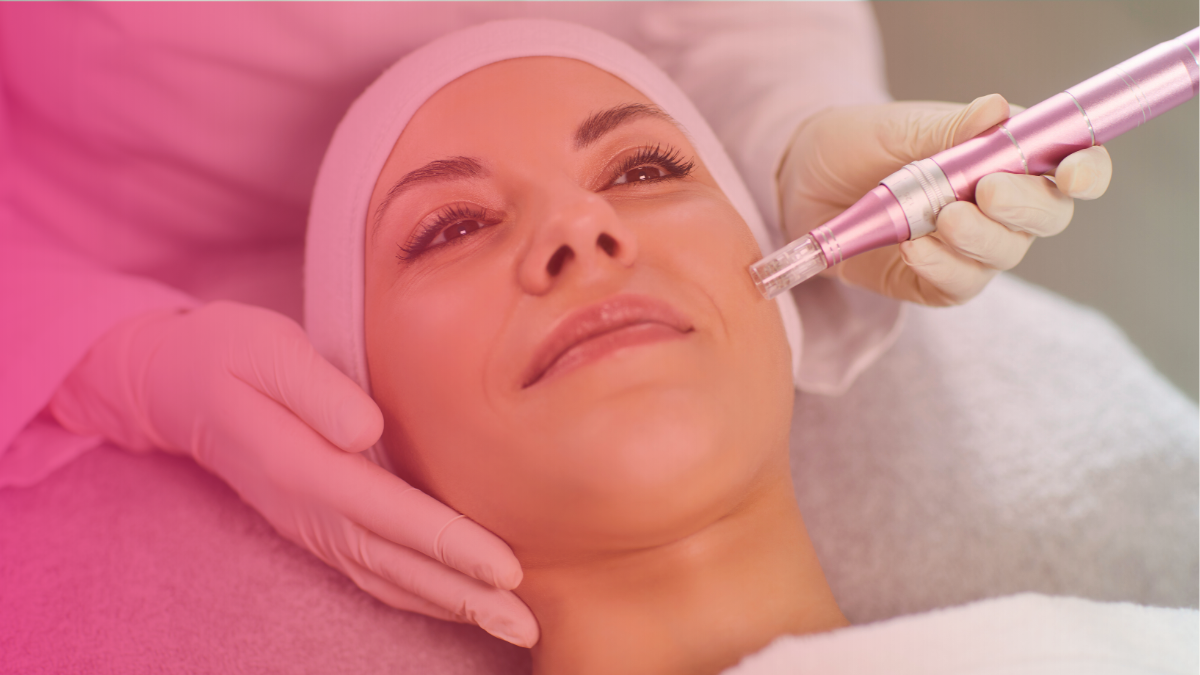
For most acne scars, microneedling and laser resurfacing both deliver real results — but laser resurfacing tends to work faster while microneedling costs significantly less and carries lower risk for darker skin tones. The right answer depends on your scar type, skin tone, budget, and how much downtime you can take.
The comparison also has a step that comes before it. Scar treatment only works when the treatment is matched to the specific kind of scar you have, and a substantial number of patients booking either treatment are actually looking at marks that are not scars at all. Reading the section on scar types below before you compare prices will save you more money than choosing the cheaper treatment would.
Is microneedling or laser resurfacing better for acne scars?
It depends entirely on what kind of scars you have. For boxcar and rolling scars — the wide, shallow depressions most common after cystic acne — both treatments can produce meaningful improvement. Microneedling creates controlled micro-injuries that trigger your skin’s collagen repair response, gradually filling in depressed areas. Laser resurfacing, particularly ablative devices such as CO2 and Er:YAG, removes skin layers and stimulates deeper remodeling, which can produce more dramatic results in fewer sessions.
Prices vary by location and provider.
RF microneedling devices like Morpheus8 and Sylfirm X add radiofrequency heat to standard microneedling, allowing for deeper tissue remodeling that closes the gap somewhat between the two approaches.
One critical factor: if you have icepick scars — the narrow, deep pits that look like enlarged pores — neither microneedling nor laser resurfacing addresses them effectively. TCA cross is the appropriate treatment for icepick scars, and a good provider will tell you that upfront.
Skin tone is also a deciding factor. Ablative lasers carry a meaningful risk of hyperpigmentation on medium to deeper skin tones (Fitzpatrick types IV through VI). Microneedling is generally considered safer across all skin tones. If you have deeper melanin, microneedling or a non-ablative laser device is typically the more conservative starting point.
What kind of scar do you actually have?
Acne leaves behind several distinct things, and they respond to entirely different treatments. Boxcar scars are broad depressions with sharply defined edges. Rolling scars are shallower and wavier, with sloping edges, and are often tethered to deeper tissue by fibrous bands. Icepick scars are narrow and deep. Hypertrophic and keloid scars are raised rather than depressed, and they respond to injections and other approaches rather than to resurfacing, which can make them worse.
The most common misidentification is the flat red or brown mark left behind after a spot heals. Post-inflammatory erythema, which appears pink or red, and post-inflammatory hyperpigmentation, which appears brown, are discoloration rather than a change in skin structure. Both fade over months on their own, and both respond to sunscreen, topical treatment, and light-based or gentler options rather than to a full resurfacing protocol. Run your finger over the area with your eyes closed. If the skin feels flat, you are most likely dealing with a mark rather than a scar, and paying for a scar protocol would be spending money on the wrong problem.
Assessing your own scars is easier in the right conditions. Overhead lighting and a mirror held at an angle reveal depth that flat bathroom lighting hides, and most patients discover they have a mix of types rather than one. Photographs taken in consistent light every few weeks are also the only honest baseline, because scarring changes slowly enough that memory is unreliable. Bring those photographs to your consultation. A provider assessing your skin alongside images from before your acne settled has considerably more to work with than one looking at a single moment.
Do you need to treat your acne first?
Yes, and this is the step providers most often have to talk patients out of skipping. Resurfacing treatments performed over active inflammatory acne can spread bacteria, aggravate lesions, and produce new marks in the process of treating old ones. More importantly, treating scars while acne is still active means new scars form after the protocol finishes, which wastes the investment.
Patients who have taken isotretinoin need a conversation about timing before booking either treatment. Practice varies, with some providers observing a long waiting period after the course ends and others working with shorter intervals based on more recent evidence, so ask your prescribing physician and your treating provider directly rather than relying on a general rule. Anyone with a history of cold sores should mention it, since both treatments can trigger an outbreak and prophylactic antiviral medication is commonly prescribed beforehand.
How many sessions do you need for each?
Scar protocols for microneedling typically require 3–6 sessions, spaced four to six weeks apart. Results build gradually with each session as collagen production increases. Most patients see noticeable improvement by session three and optimal results several months after completing the full protocol.
Laser resurfacing timelines vary by device. Ablative treatments can produce significant results in one to two sessions, which is one of their main advantages over microneedling. Non-ablative laser options — which heat the dermis without removing skin — require more sessions to achieve comparable results but come with considerably less recovery time. Your provider should set realistic expectations based on the specific device they use.
Ask which device you are actually being treated with rather than accepting a brand name alone, because several laser families include both ablative and non-ablative platforms under a single trade name. The distinction changes your downtime, your session count, and your risk profile, so it belongs in the consultation rather than being discovered afterward.
Results also arrive on a longer timeline than the appointment schedule suggests. Collagen remodeling continues for months after the last session, so the final assessment for either treatment belongs somewhere around the three-to-six-month mark rather than immediately afterward. The improvement itself is structural, which means it does not fade the way a surface treatment does, though new acne can create new scarring and aging continues regardless. Patients who judge a protocol at week six routinely conclude it failed when it was simply unfinished.
Which has more downtime?
Laser resurfacing, particularly ablative treatments, involves substantially more recovery. Fully ablative CO2 resurfacing can mean one to two weeks of visible healing — redness, peeling, and sensitivity. Fractional ablative devices, which treat only a portion of the surface at a time and leave untreated skin in between to speed healing, typically involve five to seven days of downtime. Non-ablative fractional lasers such as Fraxel, which heat the dermis without removing the surface at all, reduce this further to a few days of redness and mild swelling.
Microneedling downtime is generally shorter. Most patients experience redness and mild swelling for 24 to 72 hours after a session. RF microneedling can extend this slightly, with some swelling lasting three to five days depending on treatment intensity. You can typically return to work within a few days of a standard microneedling session.
If you need to plan around a specific event or work schedule, microneedling’s predictable, lower-intensity recovery is easier to manage across a multi-session protocol.
What recovery actually involves is worth picturing before you commit. After ablative resurfacing, the skin weeps and crusts in the early days, requires frequent application of an occlusive ointment, and cannot be covered with makeup until the provider clears it, which is why the week is genuinely disruptive rather than merely inconvenient. Microneedling recovery looks closer to a strong sunburn that settles quickly. Both require strict sun avoidance afterward, and both carry a risk of pigment change if that instruction is ignored, which matters more for anyone treating scars on skin that pigments readily.
Which treatment is cheaper?
Microneedling is significantly less expensive per session. At $300–$450 per session nationally, a full 3–6 session scar protocol runs roughly $900–$2,700 total. Laser resurfacing costs $2,000–$3,000 per session depending on the device, which means even a single ablative treatment can match or exceed the cost of an entire microneedling series.
The cost-per-result calculation matters here. If laser resurfacing produces comparable improvement in one or two sessions versus six microneedling sessions, the total spend may be similar. The difference is how that spend is distributed — and whether your skin type and scar pattern make ablative laser a safe option at all.
Prices vary by market, provider experience, and device. NYC and Los Angeles providers typically charge at the higher end of both ranges.
What drives the price up or down?
Beyond metro area, four variables move a quote meaningfully. The first is the device itself, since practices price around the cost of the equipment and a fractional ablative laser represents a far larger capital investment than a microneedling pen. The second is whether radiofrequency is involved, because RF microneedling sits well above standard microneedling in price and closer to laser territory.
The third is add-ons. Microneedling with PRP, sometimes marketed as a vampire facial, costs more than microneedling alone, as do exosome and growth-factor serums applied during treatment. The fourth is the treatment area and package structure. Full-face pricing differs from treating cheeks alone, and most practices discount a series, which is worth asking about given that scar protocols are multi-session by design. Ask whether follow-up visits, post-treatment products, and any numbing are included in the quoted figure, since those are the line items most often added later.
At-home microneedling rollers sit outside this comparison entirely. The needle depth available in consumer devices does not reach the layer where scar remodeling happens, so they cannot substitute for a professional protocol, and using them over scarred or acne-prone skin without proper sterilization introduces an infection risk for no meaningful benefit. Money saved on a home device is money that does not go toward the treatment that would actually change your skin.
Who is not a good candidate for either treatment?
Anyone with active inflammatory acne, an active skin infection, or an open cold sore in the treatment area should wait. Patients with a history of keloid scarring need a careful conversation before any treatment that deliberately injures the skin, as do patients with active eczema, psoriasis, or dermatitis in the area to be treated.
Pregnancy and breastfeeding are typical reasons to defer, as are immunosuppression, poorly controlled diabetes, and any condition that impairs wound healing. Recent isotretinoin use, recent chemical peels, and recent sun exposure or a tan all change the risk calculation and the timing. Patients with deeper skin tones are not excluded from these treatments, but they should be treated by someone experienced with their skin type, and a test spot in a discreet area is a reasonable request that a good provider will not resist.
What will neither treatment do?
Neither treatment erases acne scarring. Realistic protocols aim for meaningful improvement in depth, texture, and how the skin catches light, and patients who go in expecting scars to disappear are set up for disappointment regardless of which option they choose. Photographs taken under consistent lighting are the only reliable way to judge progress, because gradual change is nearly invisible in daily mirror checks.
Neither treatment addresses icepick scars effectively, as noted above, and neither resolves scars that are tethered deep beneath the surface without additional help. Rolling scars bound down by fibrous bands often need subcision, a separate procedure that releases those tethers, before resurfacing can improve them. Many patients end up with a combination plan — subcision for tethered scars, TCA cross for icepick scars, filler for individual depressions, and microneedling or laser across the whole area for texture. A provider who proposes a single modality for every scar on your face without examining them individually is worth a second opinion.
What should I ask before booking?
Ask the provider to identify your scar types out loud during the consultation and to explain which of your scars each proposed treatment will and will not improve. That single question separates a genuine treatment plan from a package sale.
Ask which specific device will be used, whether it is ablative or non-ablative, what depth and settings are planned, and how many treatments they expect you to need in total. Ask what they have seen on skin like yours and whether they recommend a test spot. Ask what the full protocol costs rather than the per-session price, and what happens if you need more sessions than planned. Finally, ask who performs the treatment and what their credentials are, since scar work rewards experience more than almost any other aesthetic treatment.
Find providers near you
Get Clear Beauty is built on price transparency, so you can compare what real providers charge before booking rather than calling around for quotes. Compare pricing at the microneedling cost guide, which shows what to expect by location and treatment type. If you’re planning a multi-session protocol, the microneedling recovery guide covers what to expect between appointments and how to protect your results.
Compare Microneedling providers and estimated prices near you.
Microneedling cost guide →This article is for general education about aesthetic treatments and pricing. It is not medical advice and is not a substitute for a consultation with a licensed provider. Always confirm current pricing and suitability directly with a provider before booking.
New aesthetic treatment blogs every week, sent straight to your inbox.
Subscribe on Substack →
Comments
Comments are reviewed before they appear. For medical questions, please consult a licensed provider — we cannot give medical advice here.
Loading comments…